How Long Do Gutter Guards Last?


By Dustin Drudy August 5, 2026

"How long do gutter guards last?" is one of those questions that usually gets a vague answer — some version of "a long time." That isn't useful when you're trying to decide whether to put a system on your house.


The honest answer is that gutter guard lifespan varies enormously. Some products are effectively disposable and need replacing within a few seasons. Others are built to outlast the roof they're mounted under. Almost all of that spread comes down to three things: what the guard is made of, how the mesh is attached to the frame, and who installed it.


Here's a straight look at how long each type actually lasts, what makes guards fail early, and how to tell whether the ones on your home are nearing the end.

The short answer, by material

Foam and brush inserts — the drop-in kind you set into the gutter channel — have the shortest life of anything on the market, typically a few seasons. Foam breaks down under UV exposure and holds moisture. Brush inserts don't degrade as fast, but both trap debris inside the gutter instead of shedding it, so they tend to get pulled out long before they physically wear out.


Plastic and vinyl snap-on covers generally last several years, less in strong sun or hard freeze-thaw climates. Plastic becomes brittle, warps out of shape, and yellows. The clips and tabs that hold the cover in place are usually the first thing to let go.
Basic metal screens can hold up structurally for a long time, but that's rarely what ends their service life. Their openings are wide enough that pine needles, seed pods, and shingle grit pass straight through, so the gutter clogs anyway. Most screens come off during a cleaning and never go back on.


Punched aluminum panels last decades. Aluminum doesn't rust, and a properly formed panel stays rigid under load. This is the category where a 20-year warranty is a realistic, honest reflection of the material.


Stainless steel micro-mesh over an aluminum body is the longest-lived design available. Stainless doesn't rust or corrode, the openings are small enough to block fine debris without clogging, and the aluminum body holds its shape. It's the only category that credibly carries a lifetime limited warranty.


Those are ranges, not promises. A well-made stainless micro-mesh guard installed badly can fail in a single winter — which is why the rest of this matters.


What actually determines how long a gutter guard lasts


The metal itself

Stainless steel is the benchmark for outdoor longevity: it doesn't rust, doesn't corrode, and doesn't fatigue through repeated freeze-thaw cycles. Aluminum doesn't rust either, and it's light enough not to stress the gutter or the fascia behind it.


The thing to watch for is what happens where two different metals meet. Dissimilar metals in contact, with water running over them, can set up galvanic corrosion that eats away at the weaker one. A system engineered as a system — stainless mesh matched to an aluminum body designed to carry it — avoids that. A guard assembled from whatever was cheapest may not.


How the mesh is attached to the frame

This is the single most under-shopped detail in the entire category, and in the field it's the most common way a micro-mesh guard fails.


Mesh has to be joined to the body somehow. If it's glued, the adhesive eventually gives up under UV and thermal cycling. If it's spot-welded or lightly crimped, the bond fatigues as the panel expands and contracts through thousands of hot-cold cycles. Once the mesh lifts even slightly along an edge, debris works underneath it and water bypasses the filter entirely. The mesh is still there. It just isn't doing its job anymore.
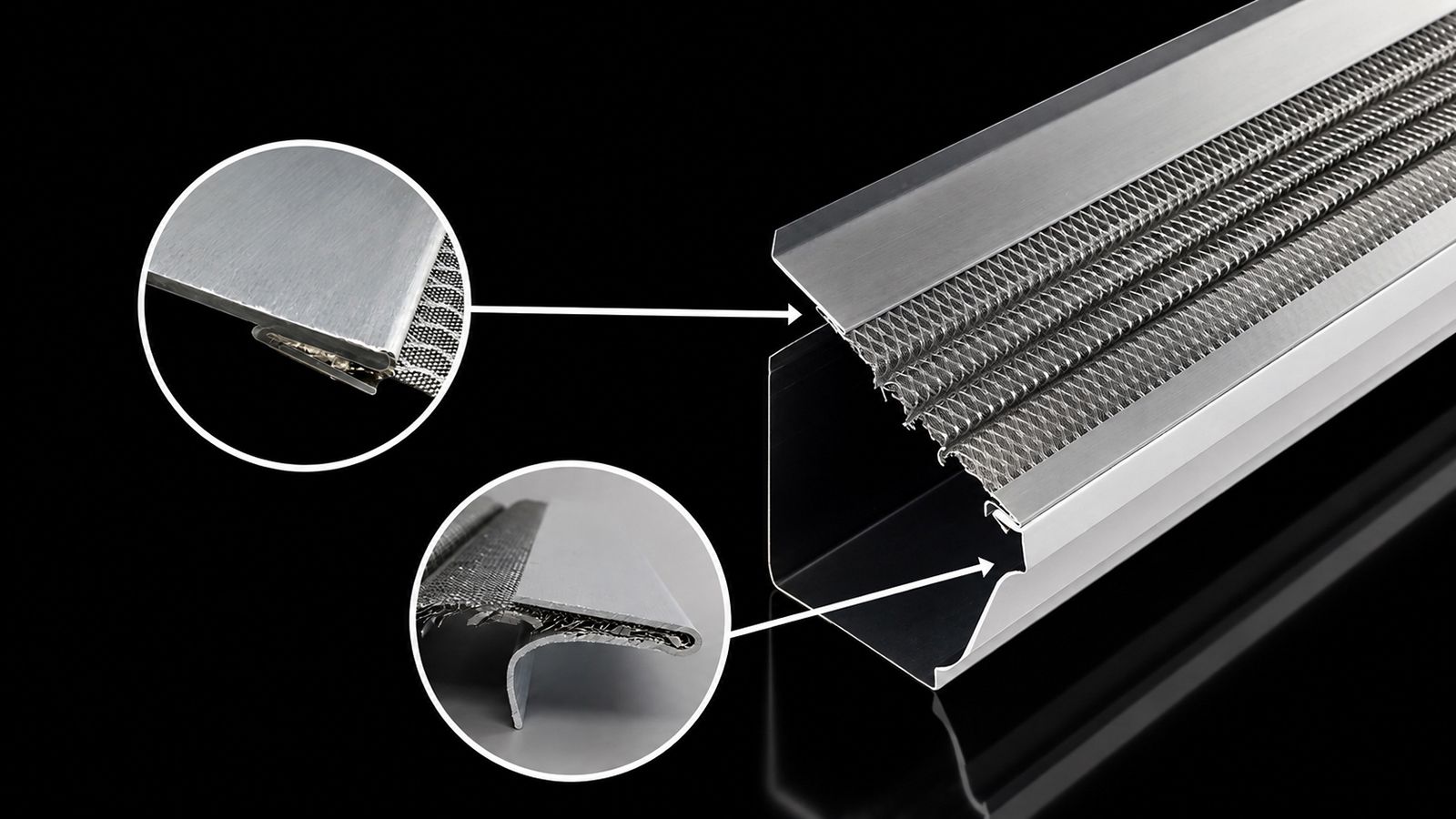
Leaf Solution's answer to this is patented hemmed-mesh construction, which mechanically folds and locks the mesh into the aluminum body rather than relying on adhesive or welds. It's on both of our micro-mesh lines. When you're comparing systems, ask specifically how the mesh is secured — it tells you more about real-world lifespan than the warranty length does.


How rigid the panel is

A guard that flexes is a guard that fails early. Under a heavy wet snow load, a flimsy panel bows down into the gutter, water ponds on top of it, and the panel takes a permanent set. Every Leaf Solution profile is formed to add box-like structural reinforcement to the gutter itself, which stiffens the whole assembly rather than just covering it.


Your climate

Freeze-thaw cycling is the hardest thing most guards face — water gets into any gap, expands, and works the joint loose a fraction at a time. Intense UV shortens the life of anything plastic. Coastal salt air accelerates corrosion in anything not corrosion-resistant. Heavy pollen and needle seasons load the surface far more than a typical leaf fall does.


Whether the guard matches your debris

A guard that's wrong for your trees doesn't wear out — it gets removed. If your property drops fine debris like pine needles, seed pods, or shingle granules, you need micro-mesh; a large-opening product will pass that material straight into the gutter. If your debris is mostly leaves and sticks, punched aluminum handles it well. Matching the product to the debris is what keeps a system on the house for its full service life.


Installation determines lifespan as much as material does


Two identical guards on two identical houses can have completely different service lives based on how they went on.


Pitch matters: micro-mesh sheds debris by letting it slide off, and that only happens at the right angle. Overlap and seam placement matter, because that's where water finds its way in. Fastening matters, both for holding the panel through decades of thermal movement and for not compromising the roofing above it. Corners and valleys matter most of all — that's where water concentrates and where a system either has proper miters and accessories or develops a leak.


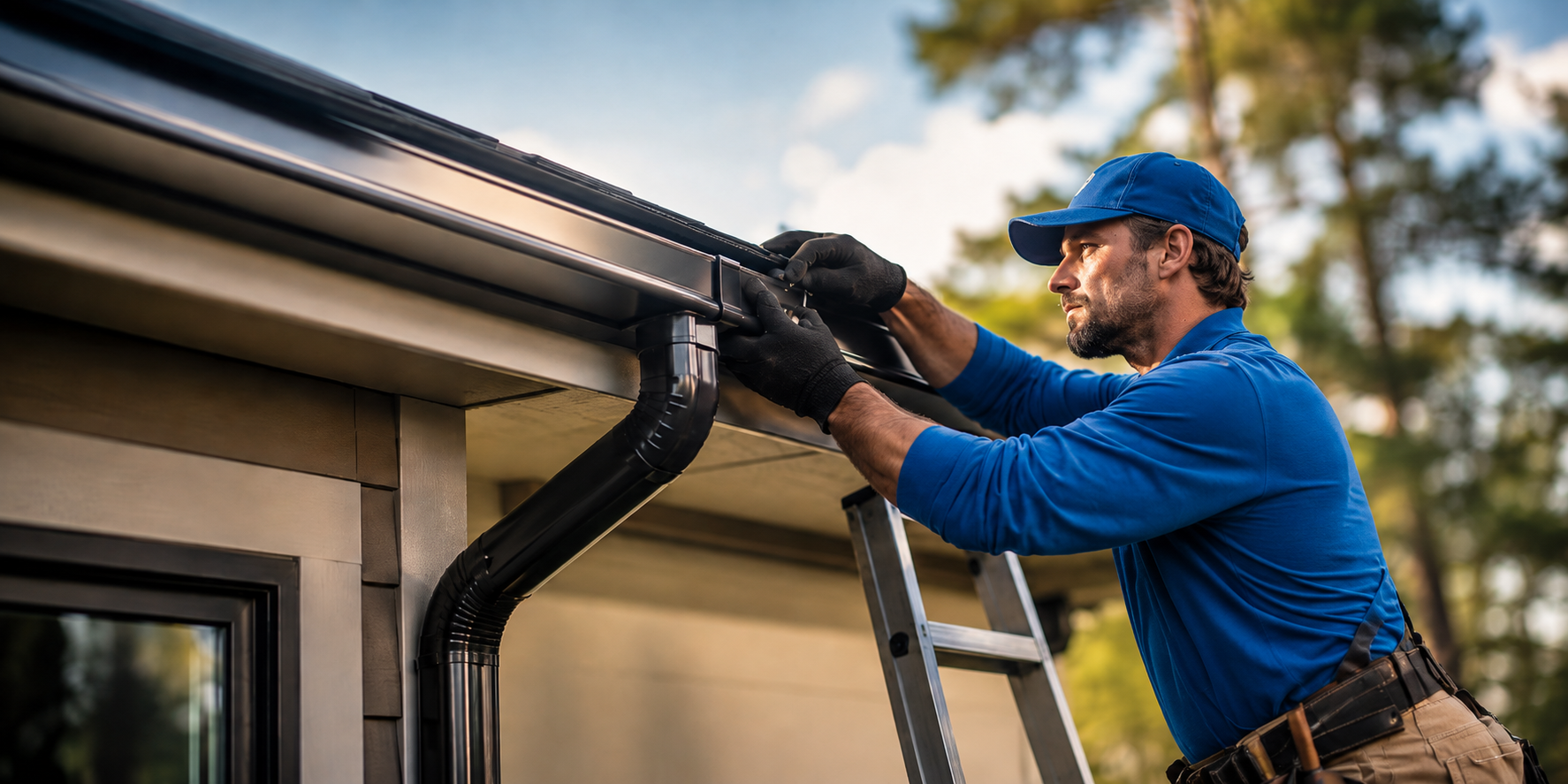
None of that is guesswork, and none of it is something to learn on your own roof. Leaf Solution gutter guards are installed exclusively by approved, trained contractors. That requirement isn't red tape — improper installation is the most common cause of premature failure across this entire product category, and it's also what puts warranty coverage at risk. A professionally installed system starts its life the way it's supposed to.


How long Leaf Solution gutter guards are built to last

We've been manufacturing gutter protection in Rochelle, Virginia since 2002, and our lineup is built around three products with different service expectations:


Leaf Solution Gutter Guard — micro-mesh with our patented capillary dips, which draw rainwater through the mesh and into the gutter. It handles up to 60 gallons per minute and is built on patented hemmed-mesh construction. Backed by a lifetime limited warranty.


Xtreme Gutter Guard — surgical-grade stainless steel micro-mesh in a flat profile, no dips, also rated to 60 gallons per minute and also built with patented hemmed-mesh construction. Backed by a lifetime limited warranty.


New Wave Gutter Guard — punched aluminum with raindrop-shaped openings, rated to 40 gallons per minute. It's our entry-level line, built for properties where the debris is primarily large material like leaves and sticks rather than fine needles and seeds. Backed by a 20-year limited warranty.


The difference in warranty length between the micro-mesh lines and New Wave isn't marketing — it's an honest reflection of what each material does over time. You can read the full terms on our
warranty page, and it's worth understanding how to read any gutter guard warranty before you sign with anyone.


Signs your current gutter guards are near the end

You don't need an inspection to catch most of these. From the ground, after a good rain, look for:


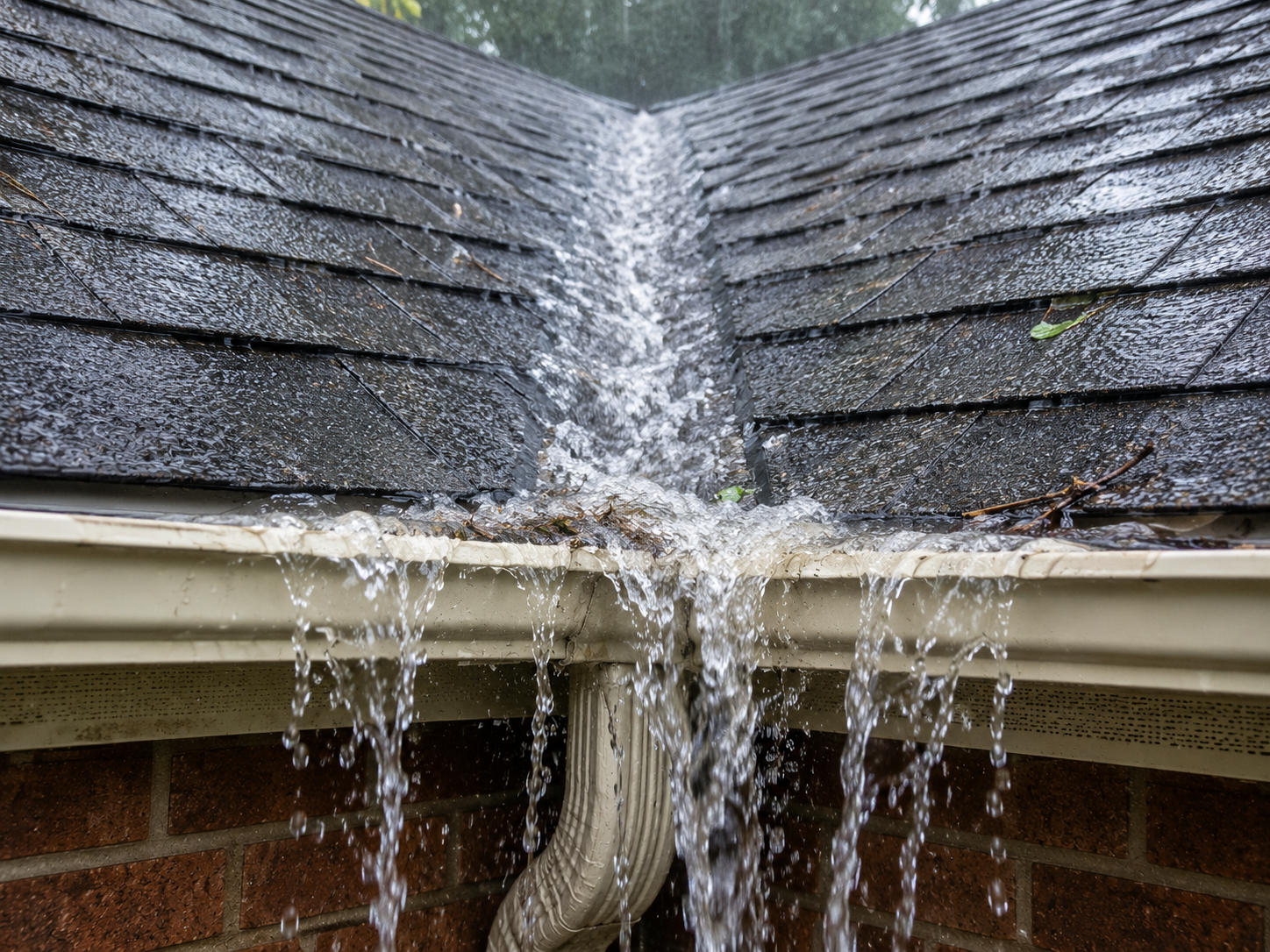
  • Water sheeting over the front lip of the gutter instead of going in. On micro-mesh, this usually means the surface is blinded by fine debris or the pitch has shifted.
  • Overflow in moderate rain, not just downpours. A guard that only fails in a storm may simply be undersized; one that fails in ordinary rain is done.
  • Visible sagging or a wavy line along the gutter run, which means the panel has taken a permanent set or the hangers are pulling.
  • Mesh lifting or separating at the edges or seams — the failure mode described above, and the clearest sign the system is finished.
  • Rust streaks on the fascia or siding below the gutter, indicating a component that isn't corrosion-resistant.
  • Yellowed, chalky, or cracked plastic, which is UV degradation and doesn't reverse.
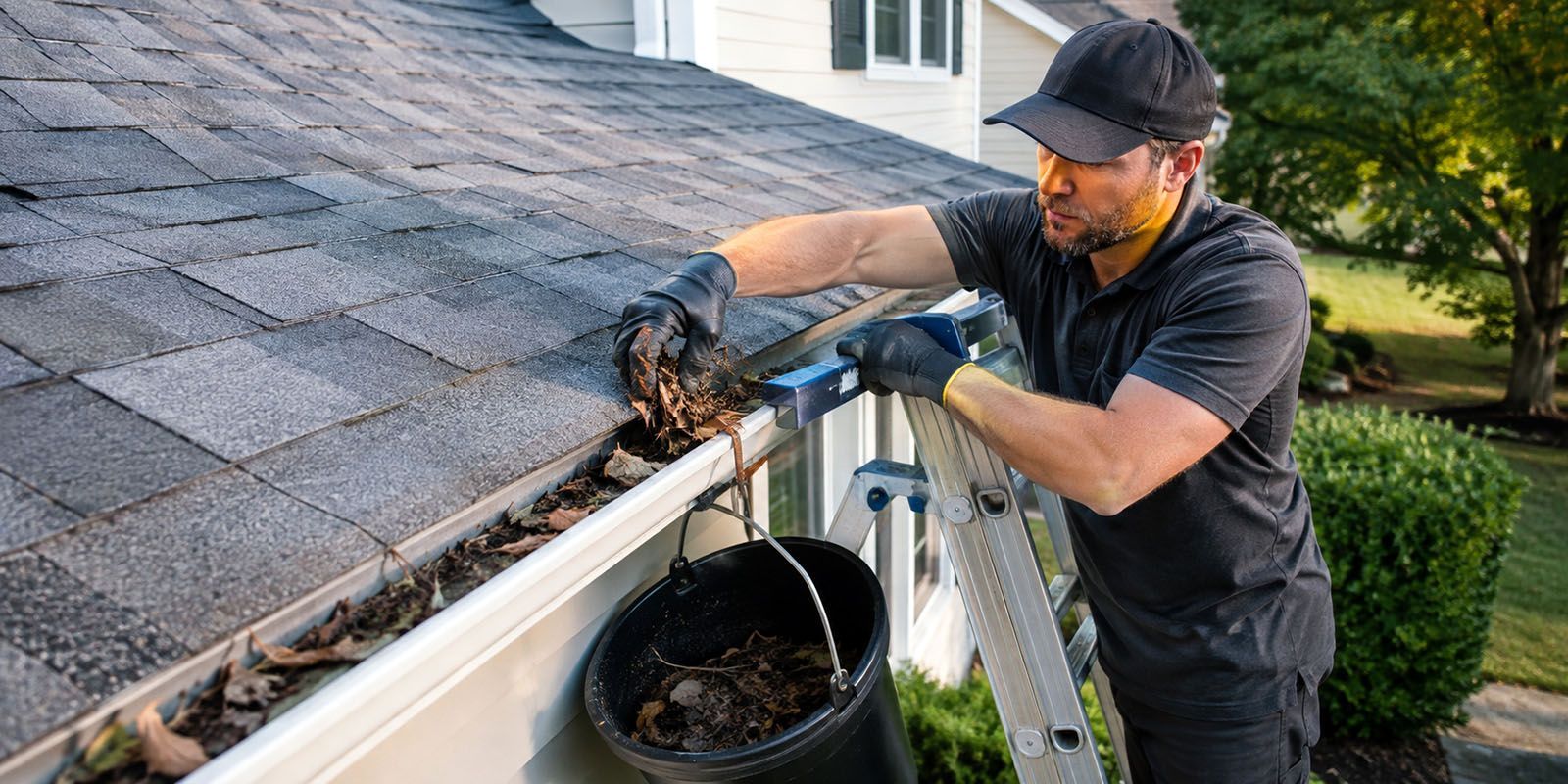
  • Cleaning frequency creeping back up. If you're back on a ladder as often as you were before the guards went on, the guards have stopped working whether or not they look broken.


If you're seeing several of these at once, the useful question isn't how to patch the existing system — it's what to replace it with, and what will actually last this time.


How to buy gutter guards that last


Five things to establish before you commit:


  • What is the mesh made of, and what is the body made of? Stainless mesh and an aluminum body is the combination built for the long term.
  • How is the mesh joined to the body? Ask directly. Hemmed, mechanically locked construction outlasts glued or spot-welded mesh.
  • Does the product match the debris on my property? Fine debris needs micro-mesh. There's no way around it.
  • Who installs it, and what does that do to the warranty? Certified installation protects both the performance and the coverage.
  • What does the warranty actually say? Read the definition of "lifetime," the transfer terms, and the exclusions — not just the headline.


A gutter guard is one of the few home improvements you should expect to buy once. The products that deliver on that are the ones built out of materials that don't degrade, assembled so the mesh can't separate, matched to the debris that actually falls on your roof, and installed by someone who does it for a living.


Frequently asked questions


How long do gutter guards last?
It depends almost entirely on material. Foam and brush inserts typically last a few seasons. Plastic and vinyl covers last several years. Punched aluminum panels last decades. Stainless steel micro-mesh guards on an aluminum body are built to last the life of the home, which is why that category is the only one that credibly carries a lifetime limited warranty. Installation quality and how the mesh is attached to the frame can shorten any of those figures dramatically.


Do stainless steel gutter guards rust?
No. Stainless steel is specifically chosen for gutter protection because it resists rust and corrosion through repeated wet-dry and freeze-thaw cycles. What can cause corrosion problems is dissimilar metals in contact with each other — which is why a stainless mesh should be paired with a body engineered to carry it, as it is on Leaf Solution's micro-mesh products.


How long do plastic or foam gutter guards last?
Foam inserts generally last a few seasons before UV exposure and retained moisture break them down. Plastic and vinyl covers usually last several years, and less in high-sun or hard-freeze climates, where they become brittle, warp, and lose their grip at the clips.


Does a lifetime limited warranty mean gutter guards last forever?
No warranty means forever, and "lifetime" is defined differently by different manufacturers — sometimes as the lifetime of the original homeowner, sometimes as a fixed term written into the fine print. What a lifetime limited warranty does tell you is that the manufacturer expects the material to perform indefinitely under normal conditions. Always read how the specific document defines the term, along with its transfer provisions and exclusions.


When should gutter guards be replaced?
When water regularly runs over the front of the gutter in ordinary rain, when the mesh is lifting or separating from the frame, when panels are visibly sagging, or when you find yourself cleaning the gutters about as often as you did before the guards were installed. Any one of those means the system has stopped protecting the gutter, regardless of how old it is.


The bottom line

Gutter guard lifespan isn't a single number — it's a direct consequence of what you buy and how it goes on. Foam and plastic buy you a few seasons. Aluminum buys you decades. Stainless micro-mesh, hemmed into an aluminum body and installed correctly by a trained contractor, is designed to be the last gutter protection the house needs.


If you want to know which of our systems fits your roofline, your trees, and your climate, the next step is a look at the actual house.


Find a Certified Installer and get a personalized recommendation for your home.

Related reading:

Do Gutter Guards Actually Work?

The Homeowner's Guide to Reading a Gutter Guard Warranty

Why Roof Valleys Cause More Gutter Problems

Become a Contractor

Become a Registered Leaf Solution Installer Today and Get FREE Sample Kits Shipped Directly to You


Join Our Installer Newsletter

Get product updates, new pricing announcements, installation tips, and exclusive promotions delivered straight to your inbox.

Contact Us

SHARE THIS

Latest Posts

Leaf Solution micro-mesh gutter guard shedding leaves while draining heavy rain on a home
By Dustin Drudy July 29, 2026
Do gutter guards really work — in heavy rain, against pine needles, in winter? An honest look at what works, what fails, and how to tell the difference.
Suburban home with micro-mesh gutter guards installed along the roofline above seamless gutters
By Dustin Drudy July 24, 2026
How to choose the best gutter guard for your home: debris type, mesh and frame quality, water flow, and warranty — a no-nonsense 2026 buyer's guide.
By Dustin Drudy July 14, 2026
How gutter protection contractors turn happy customers into a steady referral pipeline — a repeatable system for recurring word-of-mouth leads.
By Dustin Drudy July 8, 2026
Seven common gutter guard installation mistakes that cause callbacks — and how installers avoid them for cleaner, longer-lasting results.
By Dustin Drudy June 26, 2026
How to read a gutter guard quote with confidence — what should be included, the fine print to question, and how to compare installer bids.
By Dustin Drudy June 18, 2026
Pest control is one of the top three reasons homeowners look into gutter protection — and one of the topics gutter guard companies dance around the most. The reason is simple: the honest answer is "yes, mostly, and here's exactly what to expect." Here's a straight breakdown of what gutter guards do prevent, what they don't, and how the Leaf Solution lineup performs against each kind of unwanted guest. The Pests Gutter Guards Actually Stop Mosquitoes — yes, definitively. Mosquitoes don't nest in gutters. They breed in standing water. A clogged gutter holds water for days or weeks after a rain, and that water becomes a nursery for hundreds to thousands of mosquito larvae. The CDC has specifically called out clogged gutters as a residential mosquito source. A properly installed gutter guard system eliminates this entirely. Water flows through the gutter and out the downspout instead of sitting in a leaf-packed channel. With no standing water at the eave, the breeding source is gone. This alone is often worth the price of the system for homeowners in mosquito-heavy regions like the Southeast and the Gulf Coast. Birds — yes, by removing the nesting material. Birds don't pick out empty metal gutters to nest in — they nest in the leaves, twigs, and pine needles that accumulate there. A clean, properly guarded gutter doesn't offer the soft material birds need to build a nest, so it stops being attractive as a nesting site. Robins and house sparrows are the most common gutter nesters in residential homes, and both lose interest in a gutter that doesn't already have organic debris in it. The guard does the work indirectly — by keeping the debris out, it removes the invitation. Wasps and hornets — substantially reduced. Paper wasps and hornets often build under gutter overhangs and inside the upper lip of the gutter channel. They prefer dry, sheltered surfaces with easy access. A flush-mounted gutter guard removes the open gap at the top of the gutter, eliminating the most common nesting spot. They may still build under the eave or in the soffit — but the gutter itself is no longer the easy option. The Pests Gutter Guards Help With, But Don't Solve Entirely Squirrels — reduced, but not stopped. Squirrels don't nest in gutters; they use gutters as a highway to get to the roof, the soffit vents, or the attic. A gutter guard makes the gutter a less attractive perch (especially the steeper-angled designs that don't give a flat surface to sit on), but a determined squirrel can still run along the top. If squirrels in the attic are your real problem, the fix is on the roof and at the soffit vents, not in the gutter. Gutter guards help by removing the comfortable resting and food-storage spot at the eave — that's a meaningful but partial effect. Carpenter ants and termites — addressed indirectly. Both species are attracted to damp, decaying wood. Clogged gutters create exactly that condition: water saturates the fascia, the soffit, and eventually the framing behind them. Once the wood is wet and rotting, ants and termites move in. Gutter guards don't repel insects. What they do is eliminate the chronic dampness at the eave that attracts them in the first place. A dry fascia is a fascia ants and termites have no reason to investigate. The Pests Gutter Guards Don't Stop It's worth being clear about this: Roof rats and mice entering through soffit vents or roof gaps. Gutter guards don't address roof penetrations. Bats roosting in attics. Same reason. Raccoons that have already established a den in the attic. Spiders that build webs anywhere on a house. If you have an active pest problem of those kinds, you need pest control or roof remediation, not a gutter guard. We don't claim otherwise. How the Leaf Solution Lineup Performs All three of our flagship gutter guard lines eliminate the standing water and debris that drive the mosquito, bird, and wasp problems described above. They differ in the secondary details: Leaf Solution Gutter Guard uses patented hemmed-mesh micro mesh with capillary dips, installed at an angle. The slope means even small surfaces won't hold standing water, and the micro mesh keeps the fine organic debris out that would otherwise build into nest material. Lifetime limited warranty. Xtreme Gutter Guard uses surgical-grade stainless steel micro mesh in our patented hemmed-mesh construction. Stainless is particularly resistant to the kind of long-term corrosion that develops under chronic moisture — useful if your previous gutters had pest-related damage already. Lifetime limited warranty. New Wave Gutter Guard is our entry-level punched-aluminum option, sized for areas where leaves and sticks are the primary debris load. New Wave keeps larger nesting material out of the gutter, but fine debris can still pass through the larger openings, so it's best suited to homes without significant conifer or seed-shedding tree cover. 20-year limited warranty. For homeowners whose primary motivation is pest prevention — particularly mosquito control — either micro-mesh option (Leaf Solution Gutter Guard or Xtreme) gives the most complete debris exclusion and the cleanest gutter environment. The Honest Summary If a salesperson tells you a gutter guard will solve every pest problem on your property, walk away. If they tell you it won't help at all, they're equally wrong. The truth is in the middle, and it's better than most homeowners realize: eliminate the standing water and the nesting debris at the eave, and you eliminate the conditions that brought a whole category of pests to your house in the first place. Find a Certified Installer and ask about the system that best matches your home and your pest concerns.
Leaf Solutions_Gutters Guards and Ice Dams
By Dustin Drudy June 9, 2026
If you live somewhere that gets a real winter — anywhere from the Mid-Atlantic up through New England, across the Great Lakes, the Mountain West, and the northern Plains — ice dams are one of the most expensive cold-weather problems your home can develop. They're also one of the least understood. Here's what an ice dam actually is, how clogged gutters create the conditions for one, and what gutter protection does (and doesn't) do to help. What an Ice Dam Actually Is AAn ice dam is a ridge of ice that forms at the lower edge of a roof — usually right at the eave, over the gutter line — and prevents melting snow from draining off the roof. Once the dam forms, meltwater pools behind it, finds its way under the shingles, and ends up running into your attic, insulation, ceiling, and walls. The mechanism is straightforward and goes like this: Snow sits on the roof. Heat from inside the house warms the underside of the roof deck. The bottom layer of snow melts and runs down toward the eave. The eave overhangs the heated portion of the house and stays colder, so the meltwater refreezes when it reaches that section. Over hours and days, this freeze-thaw cycle builds a ridge of solid ice across the bottom of the roof — the dam. Every subsequent thaw cycle dumps more water against the dam, and that water has nowhere to go but sideways and up under the roofing. The damage shows up as ceiling stains, ruined insulation, mold, rotted sheathing, and in serious cases, partial roof tear-off and replacement. A single bad ice dam event easily runs $3,000–$15,000 in repairs. How Clogged Gutters Make It Worse During a light rain, most homeowners never notice an issue. The gutter handles the flow without difficulty. During a heavy storm, however, the dynamics change dramatically. Water accelerates as it moves down the roof. The steeper the roof, the faster it travels. By the time it reaches the valley, large volumes of water are moving at surprisingly high speed. When that concentrated stream enters the gutter, it often behaves more like a garden hose than rainfall. Now imagine forcing that water to make a sharp ninety-degree turn inside a five-inch-wide gutter. That’s exactly what many standard gutter corners are being asked to do. Not surprisingly, they struggle. What Gutter Guards Do — and Don't Do Let's be honest about this. Gutter guards are not a magic ice dam solution. The root cause of ice dams is inadequate attic insulation and ventilation, which lets heat escape through the roof deck and starts the melt cycle in the first place. Insulation and ventilation upgrades are the actual fix for chronic ice dam homes. What gutter guards do is take one of the contributing factors — debris in the gutter — off the table permanently. With a properly installed Leaf Solution gutter guard system, you eliminate the leaf-clog-freeze cycle entirely. The gutter stays empty, water has a clear path off the roof during thaws, and the ice that does form has nowhere to anchor itself inside the gutter channel. That doesn't mean ice will never form on a guarded eave. But it removes the worst case — a fully clogged gutter behaving like a solid ice trough across the front of your house. Which Leaf Solution Guard Is Right for Cold Climates? All three of our flagship product lines are engineered to handle freeze-thaw conditions, but they differ in how they perform in heavy snow country. Leaf Solution Gutter Guard uses patented capillary-dip micro mesh in our patented hemmed-mesh construction. Installed at an angle, it sheds snow and ice the same way it sheds debris — by giving meltwater a clear path to enter the gutter while everything else slides off the front. Backed by a lifetime limited warranty. Xtreme Gutter Guard uses surgical-grade stainless steel micro mesh, also in our patented hemmed-mesh construction. Stainless steel performs particularly well in repeated freeze-thaw conditions because it doesn't expand, contract, or deform the way other materials do. Backed by a lifetime limited warranty. New Wave Gutter Guard is our entry-level option — punched aluminum with raindrop-shaped openings. It's built to handle heavy water flow and large debris like leaves and sticks. New Wave is a great fit for budget-conscious homeowners in areas where the primary winter challenge is leaf-and-stick loads in the gutter rather than fine debris. Backed by a 20-year limited warranty. For homes under pine, hemlock, or fir cover in cold climates, we generally recommend the micro-mesh options (Leaf Solution Gutter Guard or Xtreme) over New Wave, because fine debris and conifer needles will get through the larger aluminum openings and become the next year's freeze plug. Pair Your Guards with Miters at the Corners The corner of a gutter is the single most likely point for an ice dam to anchor itself — it's where water slows down, where debris collects, and where freeze cycles concentrate. Leaf Solution miters expand the surface area at corners and valleys by roughly 40%, which means more room for water to move during thaws and less standing water to freeze overnight. Leaf Solution miters install only as part of a complete Leaf Solution gutter guard system, alongside Leaf Solution Gutter Guard, Xtreme, or New Wave — not as a standalone retrofit. The Bottom Line for Snow Country If you live somewhere with a real winter, gutter protection isn't a luxury — it's an insurance policy against one of the most expensive failure modes a home has. It won't replace proper attic insulation and ventilation, but it eliminates the one variable you can fix with a single install: ever having a frozen, leaf-packed gutter again. Find a Certified Installer Near In Your Area and get a personalized quote on the system that fits your climate.
By Dustin Drudy June 1, 2026
Learn why roof valleys are responsible for many gutter overflows, corner leaks, and water damage issues and how proper gutter protection can help.
By Dustin Drudy May 26, 2026
Ask any installer who's been in the gutter protection business for more than a few years what kills the most systems, and the answer is consistent: pine needles. Not oak leaves. Not maple seeds. Not even the giant clumps of sweetgum debris that look terrifying when they pile up in the fall. The quiet, year-round, single-most-defeating debris in residential gutters is the pine needle — and the reason most gutter guards fail under pine cover is a problem of physics, not marketing. Here's why pine needles are so destructive to gutter protection systems, what fails first, and what to look for in a guard that actually handles them. The Pine Needle Problem in Three Parts They're tiny. A typical pine needle is between 1 and 6 inches long and as thin as 0.5 millimeters wide. That's an order of magnitude smaller than an oak leaf, and it means most gutter guard openings — designed primarily to stop leaves — are not actually small enough to stop a needle. They fall year-round. Most deciduous debris is seasonal. You clean the gutters in November and you're mostly clear until the following fall. Pine needles don't work that way. Conifers shed needles continuously, with peak shedding usually in late summer and early fall, but real volume across every season including winter. A guard under pine cover is under constant load. They stack and weave. This is the real killer. Pine needles are stiff enough to hold their shape but flexible enough to bend through openings, and they have a natural tendency to align with one another. Once a few needles thread through a guard opening, more needles follow the same path. The opening fills, then the gutter fills, then water sheets right over the top of the system. This is why a guard can look perfectly clean from the ground for years while the gutter behind it is completely clogged. What Fails First Different gutter guard styles fail in different — and predictable — ways under pine cover. Foam inserts soak up needles like a sponge takes on water, breaking down into mulch over a few seasons. Once they're full of decomposed organic matter, they actually accelerate clogging because they hold moisture against the inside of the gutter. Bottle-brush systems trap needles by design. The brush bristles catch and hold every needle that lands on them, and within a year or two the entire system is a continuous mat of compacted debris. Removing the brushes for cleaning is the only fix, at which point you're back to cleaning gutters. Plastic screens with large openings let pine needles pass through directly into the gutter. The needles bypass the guard entirely and accumulate underneath, where they're now harder to remove than they would have been without a guard at all. Plastic also degrades in UV exposure, warping and brittling within a few summers. Coarse aluminum screens have the same problem as plastic with marginally better longevity. The mesh is simply too large to stop needles. Fine micro mesh with the wrong installation is the trickiest case. A flat-mounted micro mesh guard can stop needles, but it has no mechanism to shed them. The needles pile up flat across the top of the mesh, eventually forming a continuous mat that water can't penetrate. What Actually Works A gutter guard that handles pine needles reliably needs two things: an opening size small enough that needles can't thread through, and a mounted angle steep enough that needles slide off rather than accumulating. The opening size matters because it's measured in microns, not inches. Surgical-grade stainless steel micro mesh — the same kind used in industrial filtration — has openings small enough to stop debris at the scale of pollen and grit, never mind a pine needle. The mounted angle matters because it's where most "micro mesh" products on the market fail. A guard installed flat across the top of the gutter has no force to shed debris. A guard installed at the same angle as the roof — sloped down to the gutter's outer edge — uses gravity and rainwater to clear itself with every storm. Needles that land on it simply roll off the front and onto the ground. This is the reason Leaf Solution mounts every guard in our lineup at a slope. Xtreme uses surgical-grade stainless steel micro mesh and handles up to 60 gallons of water per minute. Evelyn's Leaf Solution uses a patented capillary-dip micro mesh design that pulls rainwater through the surface while shedding debris. Even New Wave, our punched aluminum option, is engineered with raindrop-shaped openings small enough to defeat most fine debris when properly installed at the manufacturer's specified angle. The principle is the same across all three: stop the debris on the outside, then move it off the system. Why This Matters for the Buying Decision If your home is anywhere near a pine, fir, spruce, hemlock, or cedar tree — or if your neighbor has one whose needles end up in your gutters — pine performance should be the first question you ask any gutter guard salesperson. Specifically, ask: What is the opening size in microns, not inches? Is the guard mounted flat across the gutter, or at a slope? How does the system shed needles, rather than just trap them? What does the warranty say about debris-related failures? Any system that can't answer those four questions clearly is a system you shouldn't trust in pine country. The Bottom Line Pine needles are the toughest debris a residential gutter system will ever face, and most gutter guards on the market simply weren't engineered to handle them. The ones that do all share the same design principles: fine mesh, steep mount, and materials that don't break down over time. It's the difference between a guard that looks good in year one and a guard you'll still be ignoring in year twenty — which is exactly the way it should be. Find a Certified Installer and ask specifically about pine debris performance for your home.
By Dustin Drudy May 26, 2026
The most common reason homeowners delay installing gutter protection isn't skepticism — it's sticker shock. A whole-home guard system costs more than most one-time repairs, and the natural reaction is to push it off another year. That instinct is understandable. It's also expensive.  When you actually run the numbers on what unprotected gutters cost over a decade — in cleaning, in damage, and in the slow erosion of the structure around them — gutter guards stop looking like a luxury upgrade and start looking like one of the highest-ROI decisions you can make as a homeowner. Here's the math.
Show More