
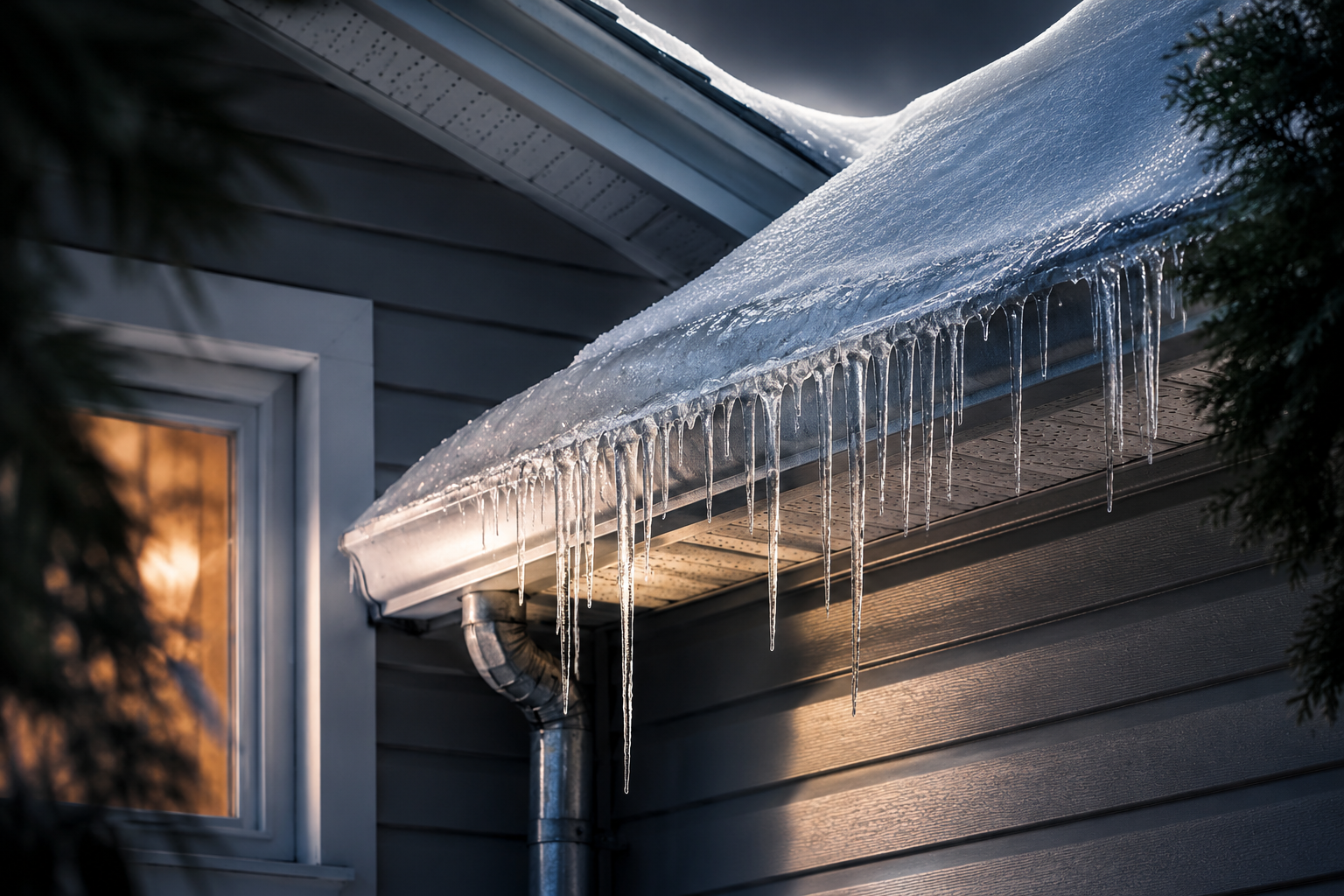

Not all gutter guards are created equal. Here’s how to find one that actually keeps your gutters clog-free for good. Clogged gutters cause some of the most expensive damage a home can suffer: overflowing water that rots fascia boards, cracks foundations, floods basements, and invites pests into your roofline. A quality gutter guard ends that cycle for good. But walk into any home improvement store and you’ll find a dozen options at wildly different prices, and it’s rarely obvious which one is right for your home. This guide breaks down what actually matters so you can choose with confidence. Start with the debris around your home The single biggest factor is what falls on your roof. If you’re surrounded by large debris like oak and maple leaves, twigs, and seed pods, almost any quality guard will help. But if you have pine trees, you’re dealing with fine needles, and flowering or seed-dropping trees shed fine grit that slips right through wider openings. Fine debris is exactly where cheap guards fail, so the finer the filtration you need, the more a micro-mesh guard pays off. Know the main types Screen and brush guards are the cheapest and easiest to install, but they only stop large debris and tend to need regular cleaning. Punched-aluminum guards, like our New Wave Gutter Guard, are far tougher and handle heavy water flow and big debris well, making them a great value when fine debris isn’t your main concern. Micro-mesh guards are the gold standard: a fine stainless steel mesh blocks virtually everything, down to shingle grit and pine needles, while still letting water through. Our most advanced micro-mesh, the Leaf Solution Gutter Guard, takes this a step further with patented capillary dips —small channels engineered into the mesh that actively draw water in rather than letting it sheet over the top, so you capture the maximum amount of water even in a hard rain. Look closely at the mesh and the frame If you go with micro-mesh, the quality of the mesh and how it’s attached matter enormously. Cheap mesh can corrode, sag, or pull loose from its frame within a few years. Both our Leaf Solution Gutter Guard and our Xtreme Gutter Guard use surgical-grade stainless steel micro-mesh set in a smooth aluminum body, joined with a patented hemmed-mesh construction so the edges never lift, sag, or peel. Xtreme handles up to 60 gallons of water per minute, far more than even the heaviest downpour produces, so you get fine filtration without sacrificing flow. Match the guard to your water volume Homes with steep roofs, large roof areas, or valleys that funnel water into one spot need a guard that can keep up in a storm. A guard that filters beautifully but overflows in heavy rain hasn’t actually solved your problem. This is where flow rate and water collection matter most, and it’s exactly what the Leaf Solution Gutter Guard’s patented capillary dips are built for: instead of relying on water simply falling through the mesh, the dips use capillary action to pull water down into the gutter, maximizing how much you collect even when rain is pouring off the roof fast. Paired with Xtreme’s high 60-gallon-per-minute capacity and a Hi-Flow mesh option built for high-volume valleys, Leaf Solution’s micro-mesh lineup is designed for exactly these conditions. Don’t overlook the warranty A warranty tells you how much the manufacturer trusts its own product. Screen guards often carry short warranties or none at all, while better products back themselves for decades. Both the Leaf Solution Gutter Guard and Xtreme Gutter Guard carry a lifetime limited warranty, and our New Wave line carries a 20-year limited warranty — a clear sign these are built to last rather than replace. Consider who makes it A gutter guard lives on your home for decades, so it’s worth knowing who stands behind yours. Leaf Solution has manufactured stainless steel gutter guards in Rochelle, Virginia since 2002. We helped pioneer the stainless mesh and aluminum body design that’s now the industry standard, and we build every product to professional-installation quality. The bottom line For most homes, especially those dealing with pine needles, seeds, or fine grit, a quality stainless steel micro-mesh guard — like our flagship Leaf Solution Gutter Guard or Xtreme — is the choice that pays for itself by ending cleanings and preventing water damage for good. If your trees only drop large leaves and you want a tougher budget option, New Wave is a solid pick. Whatever you choose, prioritize fine filtration, a strong frame, real water-flow capacity, and a warranty that lasts. Have questions about which guard fits your home? Reach out to our team at 888-231-2202 or sales@leafsolution.com and we'll help you protect your home for good.

How gutter protection contractors turn happy customers into a steady referral pipeline — a repeatable system for recurring word-of-mouth leads.

Seven common gutter guard installation mistakes that cause callbacks — and how installers avoid them for cleaner, longer-lasting results.

How to read a gutter guard quote with confidence — what should be included, the fine print to question, and how to compare installer bids.
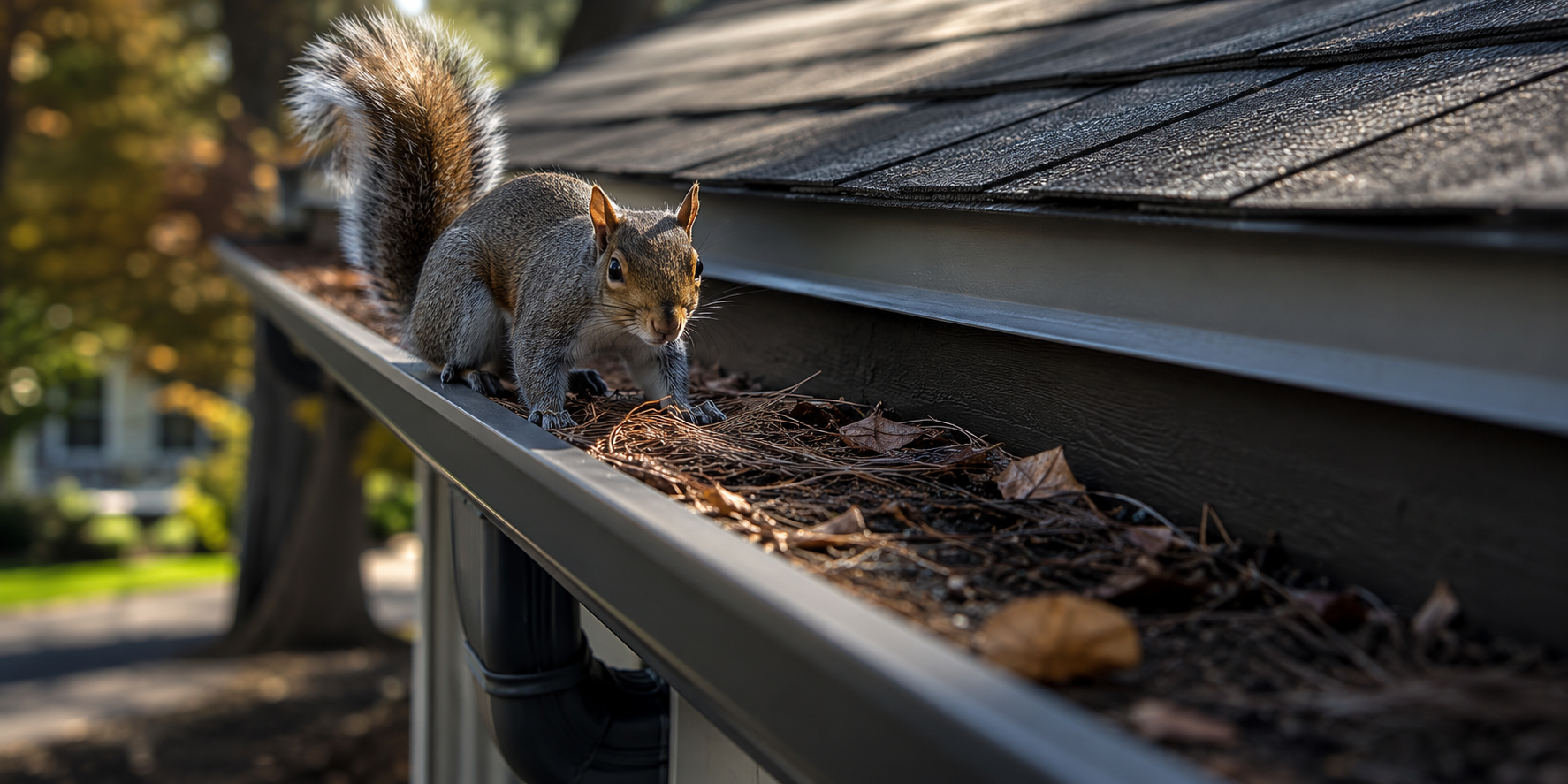
Pest control is one of the top three reasons homeowners look into gutter protection — and one of the topics gutter guard companies dance around the most. The reason is simple: the honest answer is "yes, mostly, and here's exactly what to expect." Here's a straight breakdown of what gutter guards do prevent, what they don't, and how the Leaf Solution lineup performs against each kind of unwanted guest. The Pests Gutter Guards Actually Stop Mosquitoes — yes, definitively. Mosquitoes don't nest in gutters. They breed in standing water. A clogged gutter holds water for days or weeks after a rain, and that water becomes a nursery for hundreds to thousands of mosquito larvae. The CDC has specifically called out clogged gutters as a residential mosquito source. A properly installed gutter guard system eliminates this entirely. Water flows through the gutter and out the downspout instead of sitting in a leaf-packed channel. With no standing water at the eave, the breeding source is gone. This alone is often worth the price of the system for homeowners in mosquito-heavy regions like the Southeast and the Gulf Coast. Birds — yes, by removing the nesting material. Birds don't pick out empty metal gutters to nest in — they nest in the leaves, twigs, and pine needles that accumulate there. A clean, properly guarded gutter doesn't offer the soft material birds need to build a nest, so it stops being attractive as a nesting site. Robins and house sparrows are the most common gutter nesters in residential homes, and both lose interest in a gutter that doesn't already have organic debris in it. The guard does the work indirectly — by keeping the debris out, it removes the invitation. Wasps and hornets — substantially reduced. Paper wasps and hornets often build under gutter overhangs and inside the upper lip of the gutter channel. They prefer dry, sheltered surfaces with easy access. A flush-mounted gutter guard removes the open gap at the top of the gutter, eliminating the most common nesting spot. They may still build under the eave or in the soffit — but the gutter itself is no longer the easy option. The Pests Gutter Guards Help With, But Don't Solve Entirely Squirrels — reduced, but not stopped. Squirrels don't nest in gutters; they use gutters as a highway to get to the roof, the soffit vents, or the attic. A gutter guard makes the gutter a less attractive perch (especially the steeper-angled designs that don't give a flat surface to sit on), but a determined squirrel can still run along the top. If squirrels in the attic are your real problem, the fix is on the roof and at the soffit vents, not in the gutter. Gutter guards help by removing the comfortable resting and food-storage spot at the eave — that's a meaningful but partial effect. Carpenter ants and termites — addressed indirectly. Both species are attracted to damp, decaying wood. Clogged gutters create exactly that condition: water saturates the fascia, the soffit, and eventually the framing behind them. Once the wood is wet and rotting, ants and termites move in. Gutter guards don't repel insects. What they do is eliminate the chronic dampness at the eave that attracts them in the first place. A dry fascia is a fascia ants and termites have no reason to investigate. The Pests Gutter Guards Don't Stop It's worth being clear about this: Roof rats and mice entering through soffit vents or roof gaps. Gutter guards don't address roof penetrations. Bats roosting in attics. Same reason. Raccoons that have already established a den in the attic. Spiders that build webs anywhere on a house. If you have an active pest problem of those kinds, you need pest control or roof remediation, not a gutter guard. We don't claim otherwise. How the Leaf Solution Lineup Performs All three of our flagship gutter guard lines eliminate the standing water and debris that drive the mosquito, bird, and wasp problems described above. They differ in the secondary details: Leaf Solution Gutter Guard uses patented hemmed-mesh micro mesh with capillary dips, installed at an angle. The slope means even small surfaces won't hold standing water, and the micro mesh keeps the fine organic debris out that would otherwise build into nest material. Lifetime limited warranty. Xtreme Gutter Guard uses surgical-grade stainless steel micro mesh in our patented hemmed-mesh construction. Stainless is particularly resistant to the kind of long-term corrosion that develops under chronic moisture — useful if your previous gutters had pest-related damage already. Lifetime limited warranty. New Wave Gutter Guard is our entry-level punched-aluminum option, sized for areas where leaves and sticks are the primary debris load. New Wave keeps larger nesting material out of the gutter, but fine debris can still pass through the larger openings, so it's best suited to homes without significant conifer or seed-shedding tree cover. 20-year limited warranty. For homeowners whose primary motivation is pest prevention — particularly mosquito control — either micro-mesh option (Leaf Solution Gutter Guard or Xtreme) gives the most complete debris exclusion and the cleanest gutter environment. The Honest Summary If a salesperson tells you a gutter guard will solve every pest problem on your property, walk away. If they tell you it won't help at all, they're equally wrong. The truth is in the middle, and it's better than most homeowners realize: eliminate the standing water and the nesting debris at the eave, and you eliminate the conditions that brought a whole category of pests to your house in the first place. Find a Certified Installer and ask about the system that best matches your home and your pest concerns.
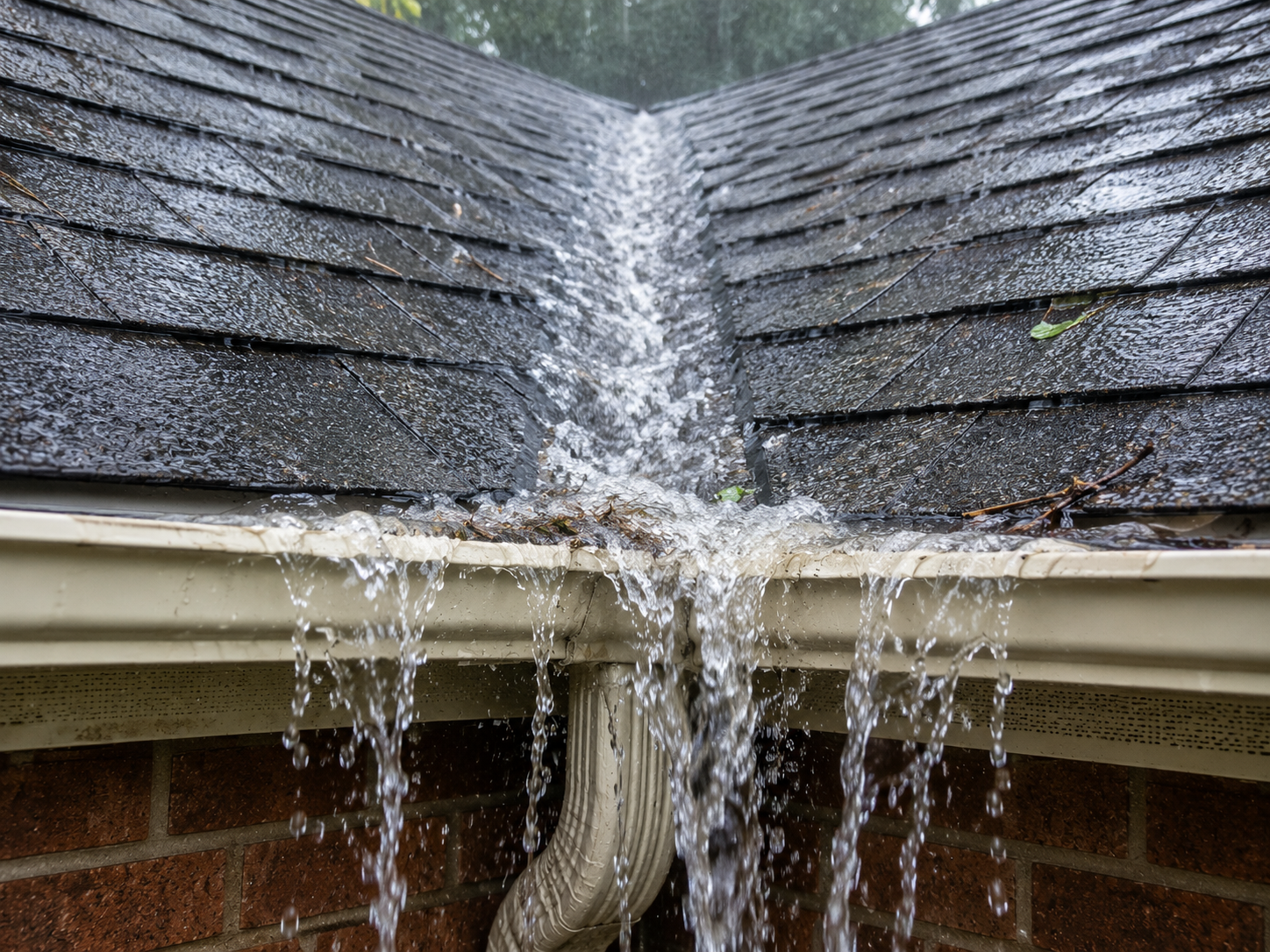
Learn why roof valleys are responsible for many gutter overflows, corner leaks, and water damage issues and how proper gutter protection can help.
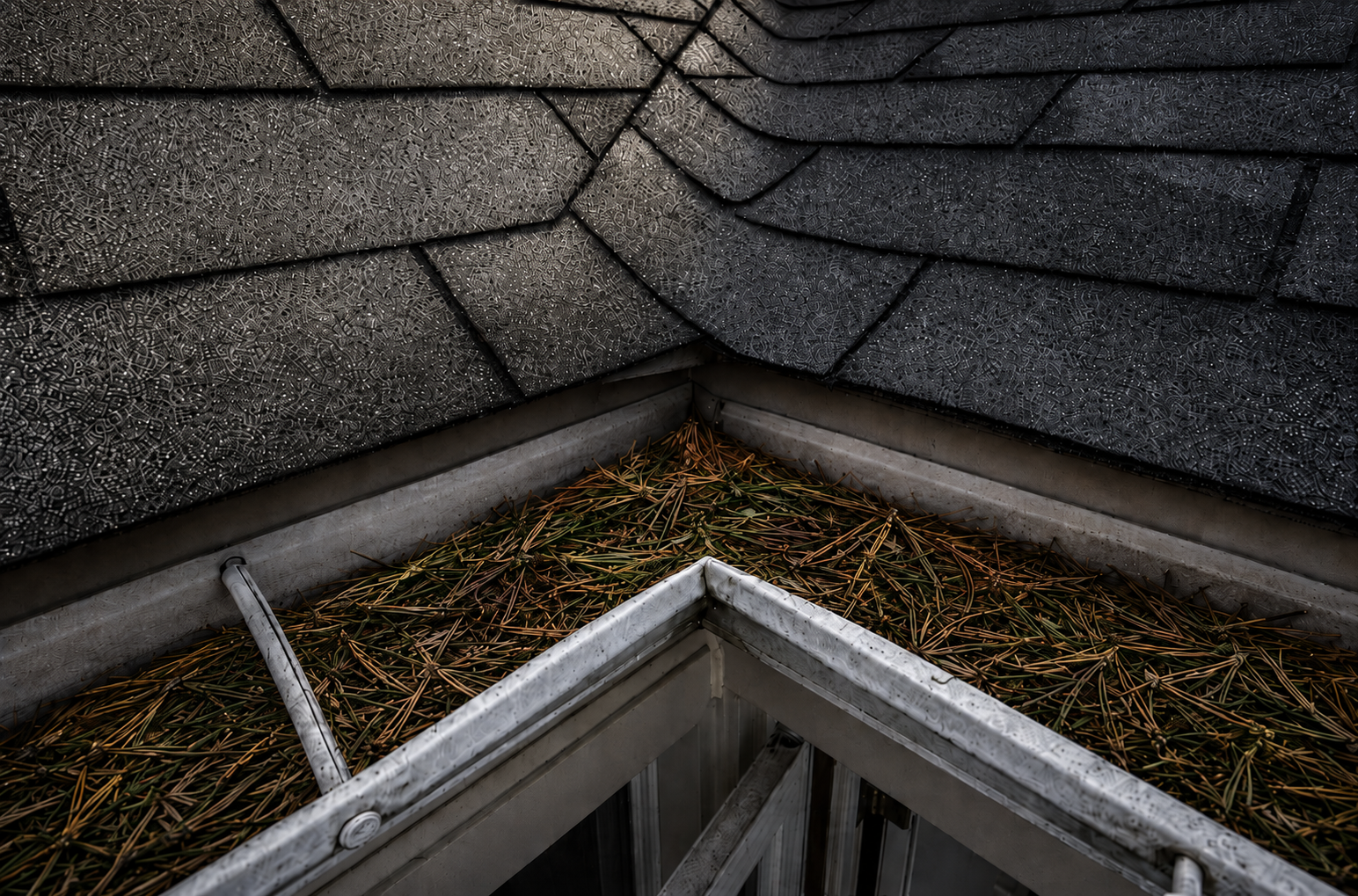
Ask any installer who's been in the gutter protection business for more than a few years what kills the most systems, and the answer is consistent: pine needles. Not oak leaves. Not maple seeds. Not even the giant clumps of sweetgum debris that look terrifying when they pile up in the fall. The quiet, year-round, single-most-defeating debris in residential gutters is the pine needle — and the reason most gutter guards fail under pine cover is a problem of physics, not marketing. Here's why pine needles are so destructive to gutter protection systems, what fails first, and what to look for in a guard that actually handles them. The Pine Needle Problem in Three Parts They're tiny. A typical pine needle is between 1 and 6 inches long and as thin as 0.5 millimeters wide. That's an order of magnitude smaller than an oak leaf, and it means most gutter guard openings — designed primarily to stop leaves — are not actually small enough to stop a needle. They fall year-round. Most deciduous debris is seasonal. You clean the gutters in November and you're mostly clear until the following fall. Pine needles don't work that way. Conifers shed needles continuously, with peak shedding usually in late summer and early fall, but real volume across every season including winter. A guard under pine cover is under constant load. They stack and weave. This is the real killer. Pine needles are stiff enough to hold their shape but flexible enough to bend through openings, and they have a natural tendency to align with one another. Once a few needles thread through a guard opening, more needles follow the same path. The opening fills, then the gutter fills, then water sheets right over the top of the system. This is why a guard can look perfectly clean from the ground for years while the gutter behind it is completely clogged. What Fails First Different gutter guard styles fail in different — and predictable — ways under pine cover. Foam inserts soak up needles like a sponge takes on water, breaking down into mulch over a few seasons. Once they're full of decomposed organic matter, they actually accelerate clogging because they hold moisture against the inside of the gutter. Bottle-brush systems trap needles by design. The brush bristles catch and hold every needle that lands on them, and within a year or two the entire system is a continuous mat of compacted debris. Removing the brushes for cleaning is the only fix, at which point you're back to cleaning gutters. Plastic screens with large openings let pine needles pass through directly into the gutter. The needles bypass the guard entirely and accumulate underneath, where they're now harder to remove than they would have been without a guard at all. Plastic also degrades in UV exposure, warping and brittling within a few summers. Coarse aluminum screens have the same problem as plastic with marginally better longevity. The mesh is simply too large to stop needles. Fine micro mesh with the wrong installation is the trickiest case. A flat-mounted micro mesh guard can stop needles, but it has no mechanism to shed them. The needles pile up flat across the top of the mesh, eventually forming a continuous mat that water can't penetrate. What Actually Works A gutter guard that handles pine needles reliably needs two things: an opening size small enough that needles can't thread through, and a mounted angle steep enough that needles slide off rather than accumulating. The opening size matters because it's measured in microns, not inches. Surgical-grade stainless steel micro mesh — the same kind used in industrial filtration — has openings small enough to stop debris at the scale of pollen and grit, never mind a pine needle. The mounted angle matters because it's where most "micro mesh" products on the market fail. A guard installed flat across the top of the gutter has no force to shed debris. A guard installed at the same angle as the roof — sloped down to the gutter's outer edge — uses gravity and rainwater to clear itself with every storm. Needles that land on it simply roll off the front and onto the ground. This is the reason Leaf Solution mounts every guard in our lineup at a slope. Xtreme uses surgical-grade stainless steel micro mesh and handles up to 60 gallons of water per minute. Evelyn's Leaf Solution uses a patented capillary-dip micro mesh design that pulls rainwater through the surface while shedding debris. Even New Wave, our punched aluminum option, is engineered with raindrop-shaped openings small enough to defeat most fine debris when properly installed at the manufacturer's specified angle. The principle is the same across all three: stop the debris on the outside, then move it off the system. Why This Matters for the Buying Decision If your home is anywhere near a pine, fir, spruce, hemlock, or cedar tree — or if your neighbor has one whose needles end up in your gutters — pine performance should be the first question you ask any gutter guard salesperson. Specifically, ask: What is the opening size in microns, not inches? Is the guard mounted flat across the gutter, or at a slope? How does the system shed needles, rather than just trap them? What does the warranty say about debris-related failures? Any system that can't answer those four questions clearly is a system you shouldn't trust in pine country. The Bottom Line Pine needles are the toughest debris a residential gutter system will ever face, and most gutter guards on the market simply weren't engineered to handle them. The ones that do all share the same design principles: fine mesh, steep mount, and materials that don't break down over time. It's the difference between a guard that looks good in year one and a guard you'll still be ignoring in year twenty — which is exactly the way it should be. Find a Certified Installer and ask specifically about pine debris performance for your home.

The most common reason homeowners delay installing gutter protection isn't skepticism — it's sticker shock. A whole-home guard system costs more than most one-time repairs, and the natural reaction is to push it off another year. That instinct is understandable. It's also expensive. When you actually run the numbers on what unprotected gutters cost over a decade — in cleaning, in damage, and in the slow erosion of the structure around them — gutter guards stop looking like a luxury upgrade and start looking like one of the highest-ROI decisions you can make as a homeowner. Here's the math.

Every gutter protection sale is won or lost in the same place: the homeowner's kitchen, on the second or third walkthrough, when the question stops being "what does it do?" and starts being "why should I spend the money?" If you sell gutter protection professionally, you've heard the same five objections a thousand times. Here's how to handle each one — not with high-pressure tactics, but with information that helps the homeowner make a better decision. The best gutter sales aren't pushed. They're earned.
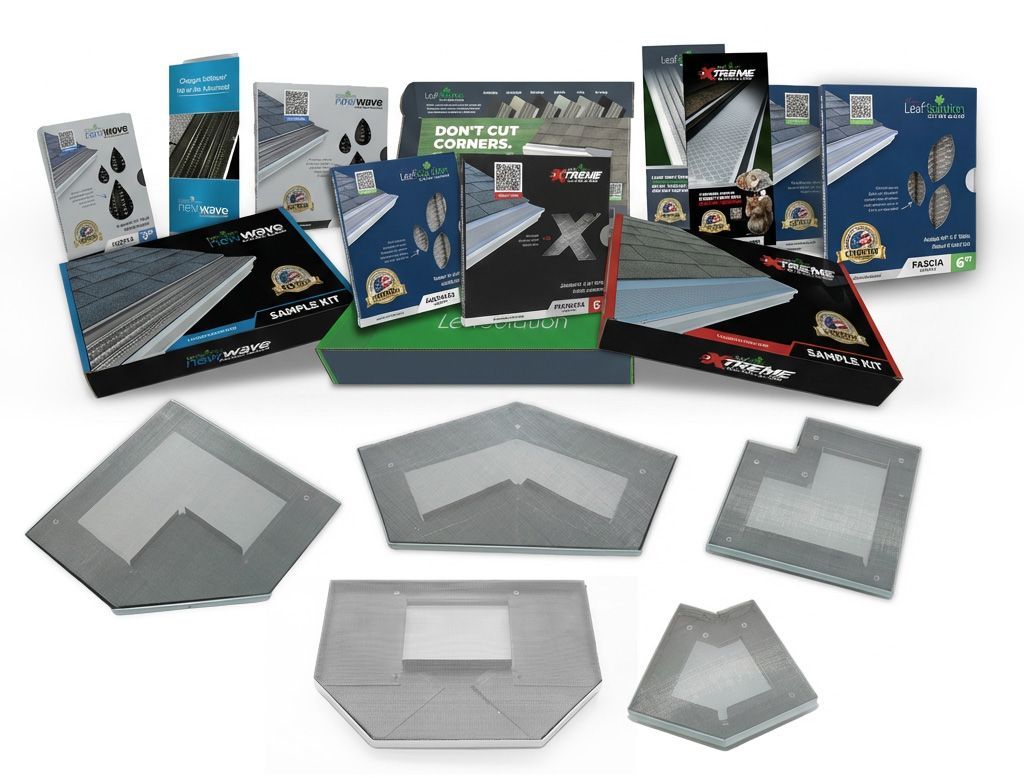
Walk around almost any house in America and you'll see them — small black or white plastic flaps mounted at the corners and valleys of the gutters. Diverters. Splash guards. Whatever the installer called them, they share one thing in common: they are a band-aid for a problem the gutter system was never designed to solve. There's a better way. It's called a miter, and once you understand how it works, you'll wonder why every gutter on every house in the country isn't already using one.

