
Seven common gutter guard installation mistakes that cause callbacks — and how installers avoid them for cleaner, longer-lasting results.

How to read a gutter guard quote with confidence — what should be included, the fine print to question, and how to compare installer bids.
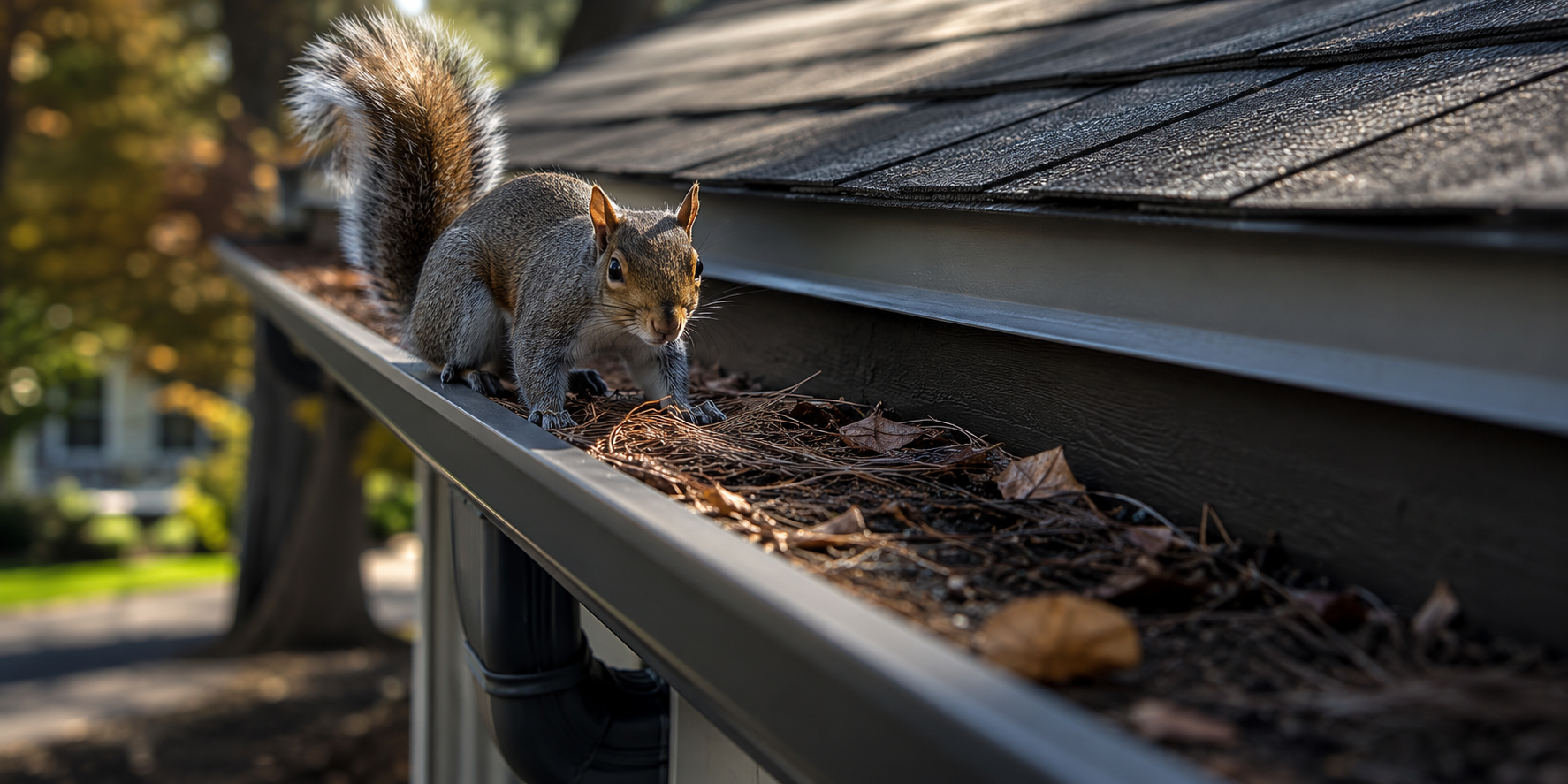
Pest control is one of the top three reasons homeowners look into gutter protection — and one of the topics gutter guard companies dance around the most. The reason is simple: the honest answer is "yes, mostly, and here's exactly what to expect." Here's a straight breakdown of what gutter guards do prevent, what they don't, and how the Leaf Solution lineup performs against each kind of unwanted guest. The Pests Gutter Guards Actually Stop Mosquitoes — yes, definitively. Mosquitoes don't nest in gutters. They breed in standing water. A clogged gutter holds water for days or weeks after a rain, and that water becomes a nursery for hundreds to thousands of mosquito larvae. The CDC has specifically called out clogged gutters as a residential mosquito source. A properly installed gutter guard system eliminates this entirely. Water flows through the gutter and out the downspout instead of sitting in a leaf-packed channel. With no standing water at the eave, the breeding source is gone. This alone is often worth the price of the system for homeowners in mosquito-heavy regions like the Southeast and the Gulf Coast. Birds — yes, by removing the nesting material. Birds don't pick out empty metal gutters to nest in — they nest in the leaves, twigs, and pine needles that accumulate there. A clean, properly guarded gutter doesn't offer the soft material birds need to build a nest, so it stops being attractive as a nesting site. Robins and house sparrows are the most common gutter nesters in residential homes, and both lose interest in a gutter that doesn't already have organic debris in it. The guard does the work indirectly — by keeping the debris out, it removes the invitation. Wasps and hornets — substantially reduced. Paper wasps and hornets often build under gutter overhangs and inside the upper lip of the gutter channel. They prefer dry, sheltered surfaces with easy access. A flush-mounted gutter guard removes the open gap at the top of the gutter, eliminating the most common nesting spot. They may still build under the eave or in the soffit — but the gutter itself is no longer the easy option. The Pests Gutter Guards Help With, But Don't Solve Entirely Squirrels — reduced, but not stopped. Squirrels don't nest in gutters; they use gutters as a highway to get to the roof, the soffit vents, or the attic. A gutter guard makes the gutter a less attractive perch (especially the steeper-angled designs that don't give a flat surface to sit on), but a determined squirrel can still run along the top. If squirrels in the attic are your real problem, the fix is on the roof and at the soffit vents, not in the gutter. Gutter guards help by removing the comfortable resting and food-storage spot at the eave — that's a meaningful but partial effect. Carpenter ants and termites — addressed indirectly. Both species are attracted to damp, decaying wood. Clogged gutters create exactly that condition: water saturates the fascia, the soffit, and eventually the framing behind them. Once the wood is wet and rotting, ants and termites move in. Gutter guards don't repel insects. What they do is eliminate the chronic dampness at the eave that attracts them in the first place. A dry fascia is a fascia ants and termites have no reason to investigate. The Pests Gutter Guards Don't Stop It's worth being clear about this: Roof rats and mice entering through soffit vents or roof gaps. Gutter guards don't address roof penetrations. Bats roosting in attics. Same reason. Raccoons that have already established a den in the attic. Spiders that build webs anywhere on a house. If you have an active pest problem of those kinds, you need pest control or roof remediation, not a gutter guard. We don't claim otherwise. How the Leaf Solution Lineup Performs All three of our flagship gutter guard lines eliminate the standing water and debris that drive the mosquito, bird, and wasp problems described above. They differ in the secondary details: Leaf Solution Gutter Guard uses patented hemmed-mesh micro mesh with capillary dips, installed at an angle. The slope means even small surfaces won't hold standing water, and the micro mesh keeps the fine organic debris out that would otherwise build into nest material. Lifetime limited warranty. Xtreme Gutter Guard uses surgical-grade stainless steel micro mesh in our patented hemmed-mesh construction. Stainless is particularly resistant to the kind of long-term corrosion that develops under chronic moisture — useful if your previous gutters had pest-related damage already. Lifetime limited warranty. New Wave Gutter Guard is our entry-level punched-aluminum option, sized for areas where leaves and sticks are the primary debris load. New Wave keeps larger nesting material out of the gutter, but fine debris can still pass through the larger openings, so it's best suited to homes without significant conifer or seed-shedding tree cover. 20-year limited warranty. For homeowners whose primary motivation is pest prevention — particularly mosquito control — either micro-mesh option (Leaf Solution Gutter Guard or Xtreme) gives the most complete debris exclusion and the cleanest gutter environment. The Honest Summary If a salesperson tells you a gutter guard will solve every pest problem on your property, walk away. If they tell you it won't help at all, they're equally wrong. The truth is in the middle, and it's better than most homeowners realize: eliminate the standing water and the nesting debris at the eave, and you eliminate the conditions that brought a whole category of pests to your house in the first place. Find a Certified Installer and ask about the system that best matches your home and your pest concerns.
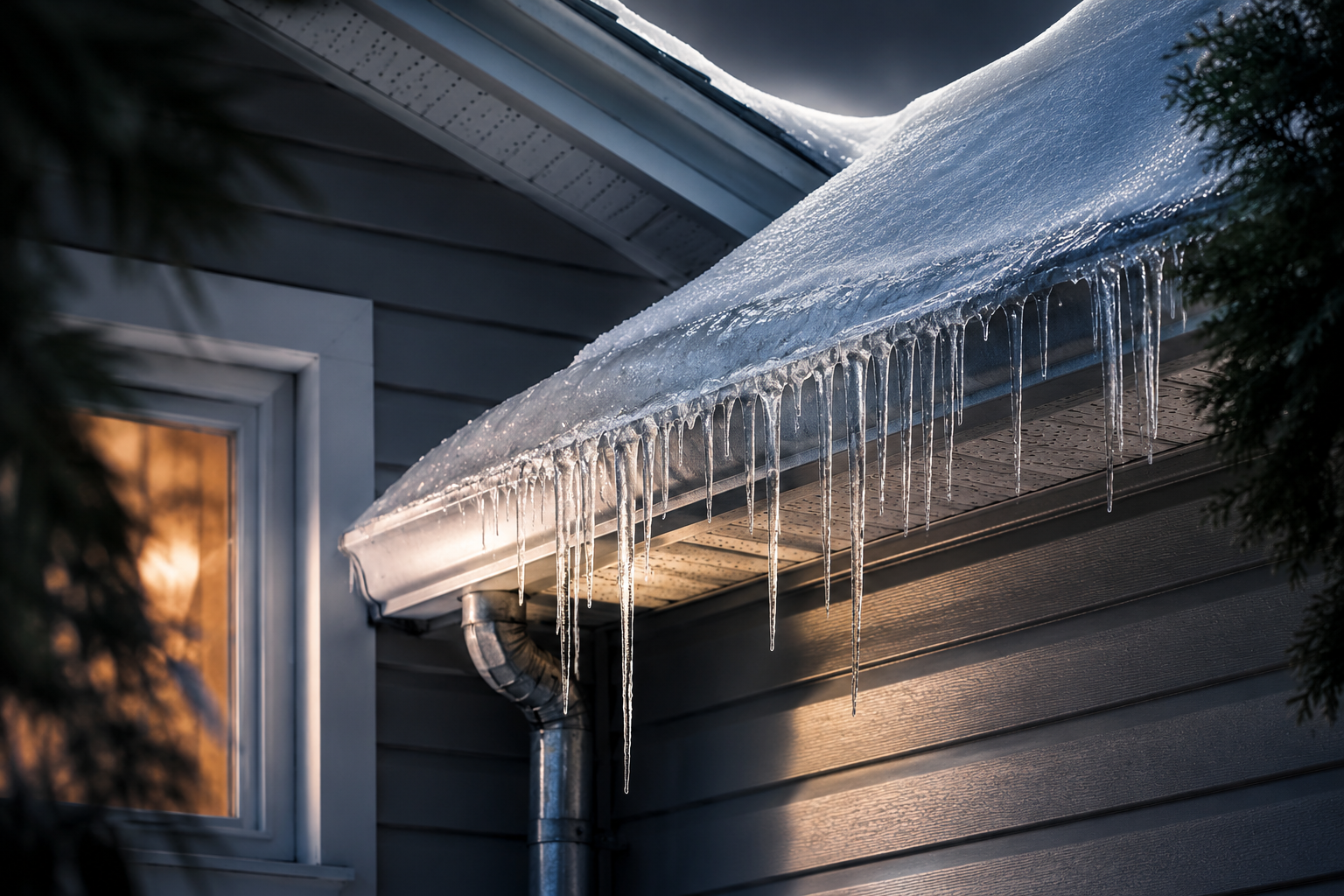
If you live somewhere that gets a real winter — anywhere from the Mid-Atlantic up through New England, across the Great Lakes, the Mountain West, and the northern Plains — ice dams are one of the most expensive cold-weather problems your home can develop. They're also one of the least understood. Here's what an ice dam actually is, how clogged gutters create the conditions for one, and what gutter protection does (and doesn't) do to help. What an Ice Dam Actually Is AAn ice dam is a ridge of ice that forms at the lower edge of a roof — usually right at the eave, over the gutter line — and prevents melting snow from draining off the roof. Once the dam forms, meltwater pools behind it, finds its way under the shingles, and ends up running into your attic, insulation, ceiling, and walls. The mechanism is straightforward and goes like this: Snow sits on the roof. Heat from inside the house warms the underside of the roof deck. The bottom layer of snow melts and runs down toward the eave. The eave overhangs the heated portion of the house and stays colder, so the meltwater refreezes when it reaches that section. Over hours and days, this freeze-thaw cycle builds a ridge of solid ice across the bottom of the roof — the dam. Every subsequent thaw cycle dumps more water against the dam, and that water has nowhere to go but sideways and up under the roofing. The damage shows up as ceiling stains, ruined insulation, mold, rotted sheathing, and in serious cases, partial roof tear-off and replacement. A single bad ice dam event easily runs $3,000–$15,000 in repairs. How Clogged Gutters Make It Worse During a light rain, most homeowners never notice an issue. The gutter handles the flow without difficulty. During a heavy storm, however, the dynamics change dramatically. Water accelerates as it moves down the roof. The steeper the roof, the faster it travels. By the time it reaches the valley, large volumes of water are moving at surprisingly high speed. When that concentrated stream enters the gutter, it often behaves more like a garden hose than rainfall. Now imagine forcing that water to make a sharp ninety-degree turn inside a five-inch-wide gutter. That’s exactly what many standard gutter corners are being asked to do. Not surprisingly, they struggle. What Gutter Guards Do — and Don't Do Let's be honest about this. Gutter guards are not a magic ice dam solution. The root cause of ice dams is inadequate attic insulation and ventilation, which lets heat escape through the roof deck and starts the melt cycle in the first place. Insulation and ventilation upgrades are the actual fix for chronic ice dam homes. What gutter guards do is take one of the contributing factors — debris in the gutter — off the table permanently. With a properly installed Leaf Solution gutter guard system, you eliminate the leaf-clog-freeze cycle entirely. The gutter stays empty, water has a clear path off the roof during thaws, and the ice that does form has nowhere to anchor itself inside the gutter channel. That doesn't mean ice will never form on a guarded eave. But it removes the worst case — a fully clogged gutter behaving like a solid ice trough across the front of your house. Which Leaf Solution Guard Is Right for Cold Climates? All three of our flagship product lines are engineered to handle freeze-thaw conditions, but they differ in how they perform in heavy snow country. Leaf Solution Gutter Guard uses patented capillary-dip micro mesh in our patented hemmed-mesh construction. Installed at an angle, it sheds snow and ice the same way it sheds debris — by giving meltwater a clear path to enter the gutter while everything else slides off the front. Backed by a lifetime limited warranty. Xtreme Gutter Guard uses surgical-grade stainless steel micro mesh, also in our patented hemmed-mesh construction. Stainless steel performs particularly well in repeated freeze-thaw conditions because it doesn't expand, contract, or deform the way other materials do. Backed by a lifetime limited warranty. New Wave Gutter Guard is our entry-level option — punched aluminum with raindrop-shaped openings. It's built to handle heavy water flow and large debris like leaves and sticks. New Wave is a great fit for budget-conscious homeowners in areas where the primary winter challenge is leaf-and-stick loads in the gutter rather than fine debris. Backed by a 20-year limited warranty. For homes under pine, hemlock, or fir cover in cold climates, we generally recommend the micro-mesh options (Leaf Solution Gutter Guard or Xtreme) over New Wave, because fine debris and conifer needles will get through the larger aluminum openings and become the next year's freeze plug. Pair Your Guards with Miters at the Corners The corner of a gutter is the single most likely point for an ice dam to anchor itself — it's where water slows down, where debris collects, and where freeze cycles concentrate. Leaf Solution miters expand the surface area at corners and valleys by roughly 40%, which means more room for water to move during thaws and less standing water to freeze overnight. Leaf Solution miters install only as part of a complete Leaf Solution gutter guard system, alongside Leaf Solution Gutter Guard, Xtreme, or New Wave — not as a standalone retrofit. The Bottom Line for Snow Country If you live somewhere with a real winter, gutter protection isn't a luxury — it's an insurance policy against one of the most expensive failure modes a home has. It won't replace proper attic insulation and ventilation, but it eliminates the one variable you can fix with a single install: ever having a frozen, leaf-packed gutter again. Find a Certified Installer Near In Your Area and get a personalized quote on the system that fits your climate.
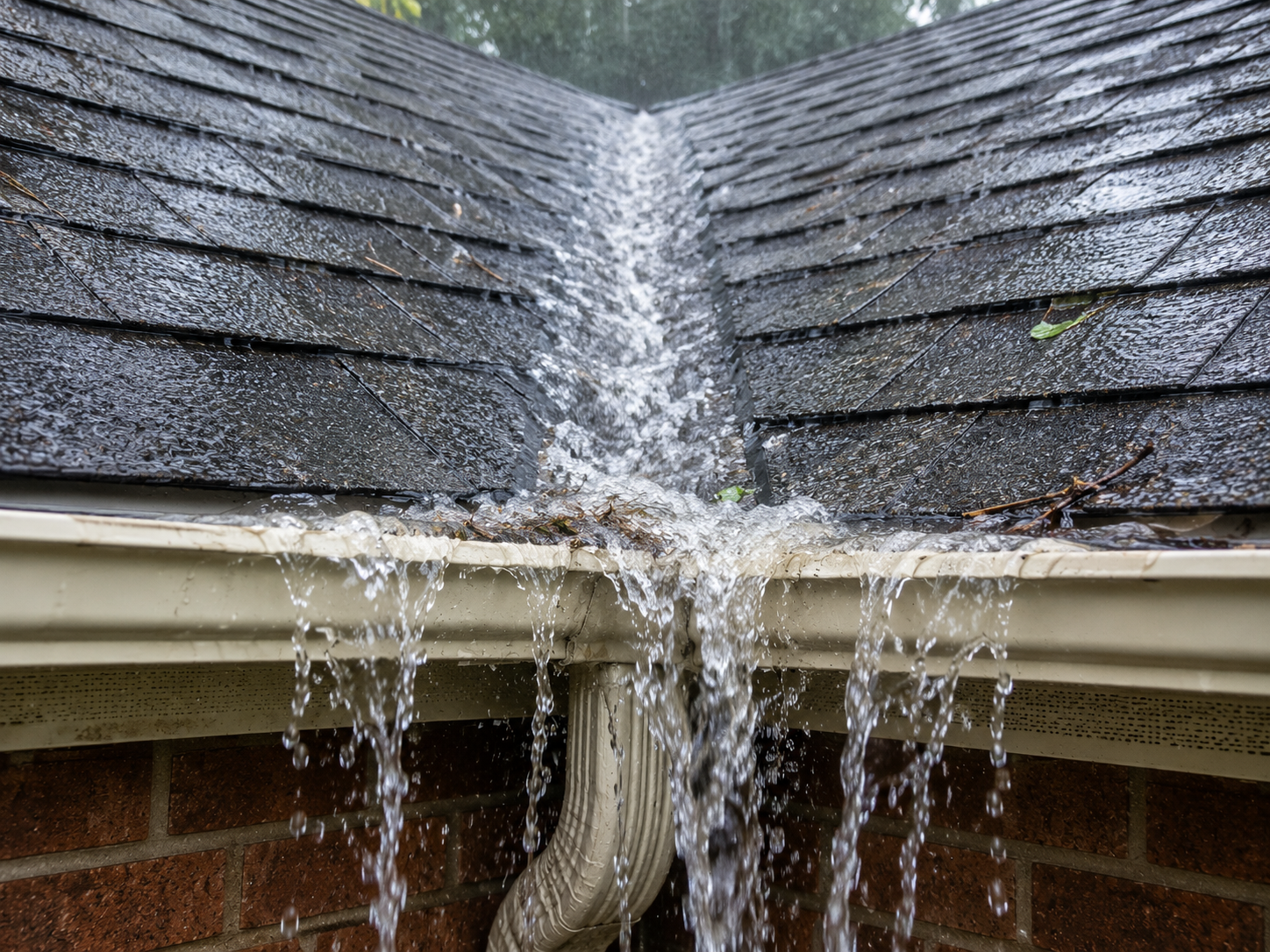
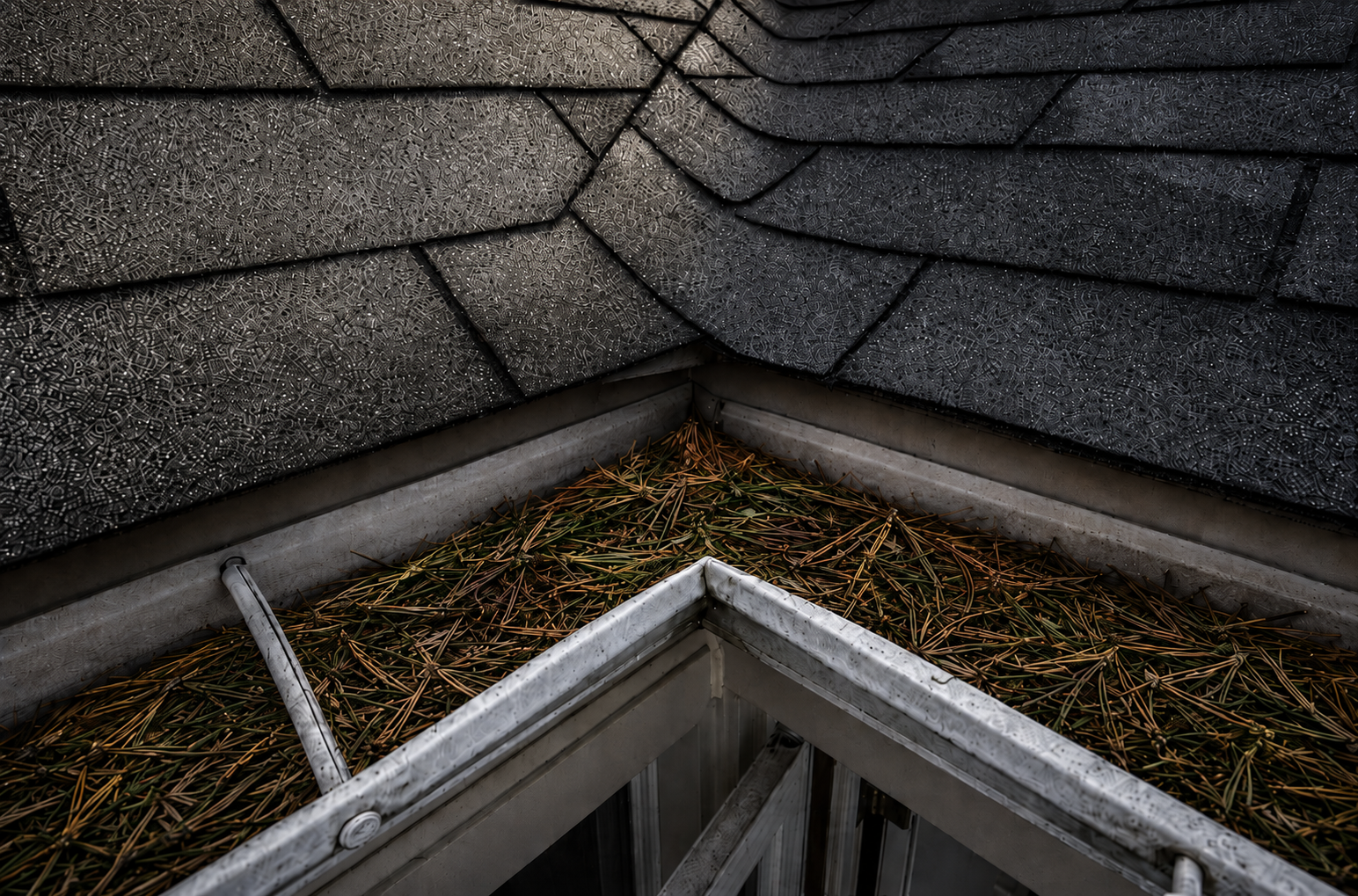
Learn why roof valleys are responsible for many gutter overflows, corner leaks, and water damage issues and how proper gutter protection can help.

The most common reason homeowners delay installing gutter protection isn't skepticism — it's sticker shock. A whole-home guard system costs more than most one-time repairs, and the natural reaction is to push it off another year. That instinct is understandable. It's also expensive. When you actually run the numbers on what unprotected gutters cost over a decade — in cleaning, in damage, and in the slow erosion of the structure around them — gutter guards stop looking like a luxury upgrade and start looking like one of the highest-ROI decisions you can make as a homeowner. Here's the math.

Every gutter protection sale is won or lost in the same place: the homeowner's kitchen, on the second or third walkthrough, when the question stops being "what does it do?" and starts being "why should I spend the money?" If you sell gutter protection professionally, you've heard the same five objections a thousand times. Here's how to handle each one — not with high-pressure tactics, but with information that helps the homeowner make a better decision. The best gutter sales aren't pushed. They're earned.
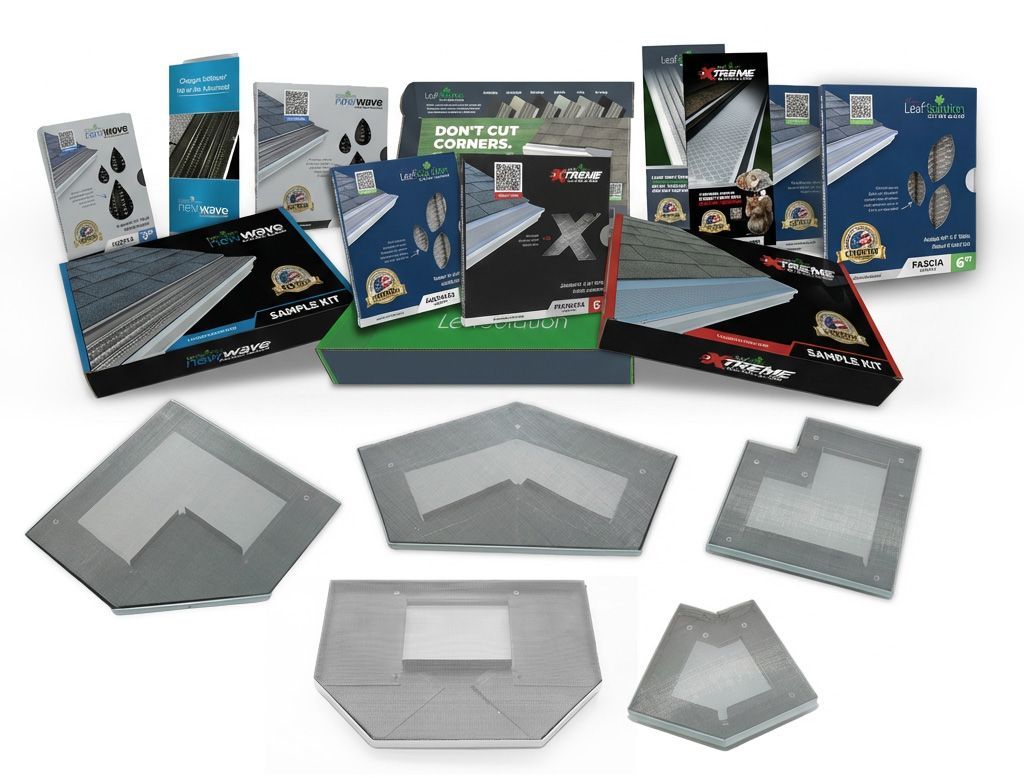
Walk around almost any house in America and you'll see them — small black or white plastic flaps mounted at the corners and valleys of the gutters. Diverters. Splash guards. Whatever the installer called them, they share one thing in common: they are a band-aid for a problem the gutter system was never designed to solve. There's a better way. It's called a miter, and once you understand how it works, you'll wonder why every gutter on every house in the country isn't already using one.
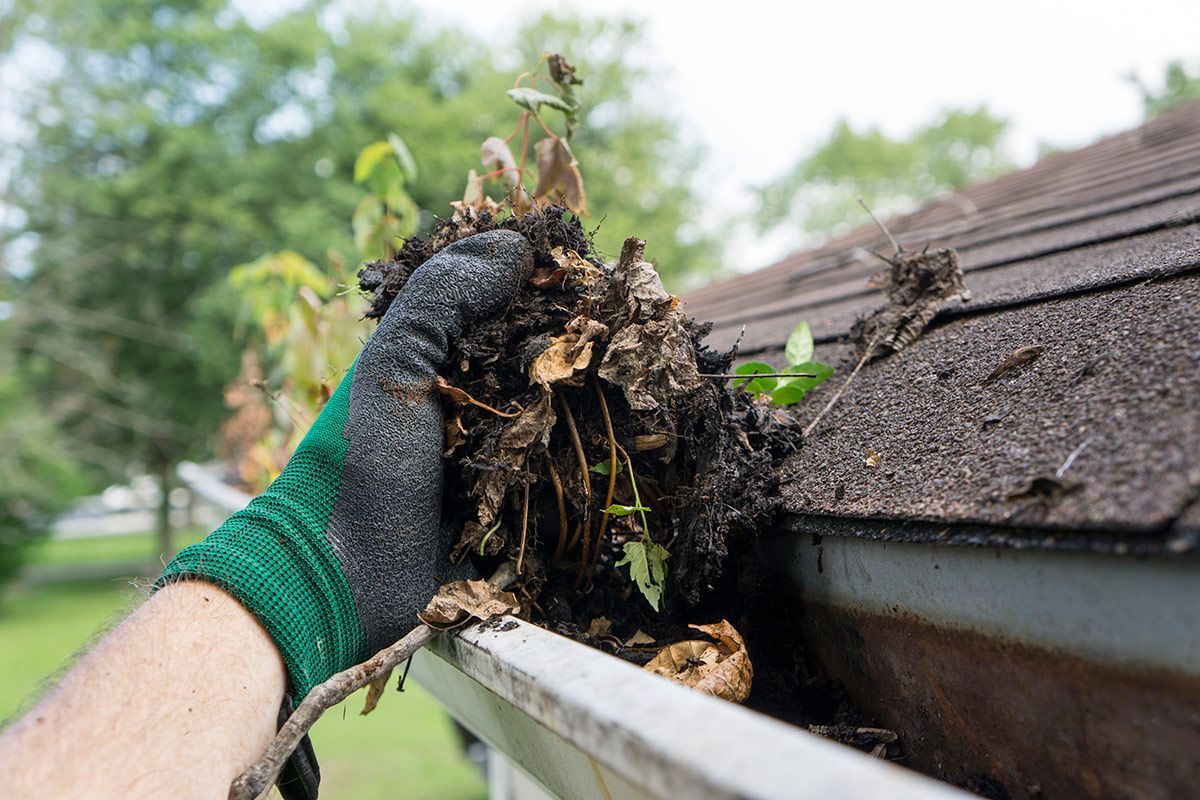
If you've ever stood at the bottom of a ladder in late October, trash bag in one hand, wondering whether this chore is really necessary every year — you're not alone. It's one of the most-Googled home maintenance questions in America, and for good reason. Gutters protect a lot more than most homeowners realize, and the cost of neglecting them adds up fast. Here's the straight answer, along with what actually happens when gutters go unmaintained.
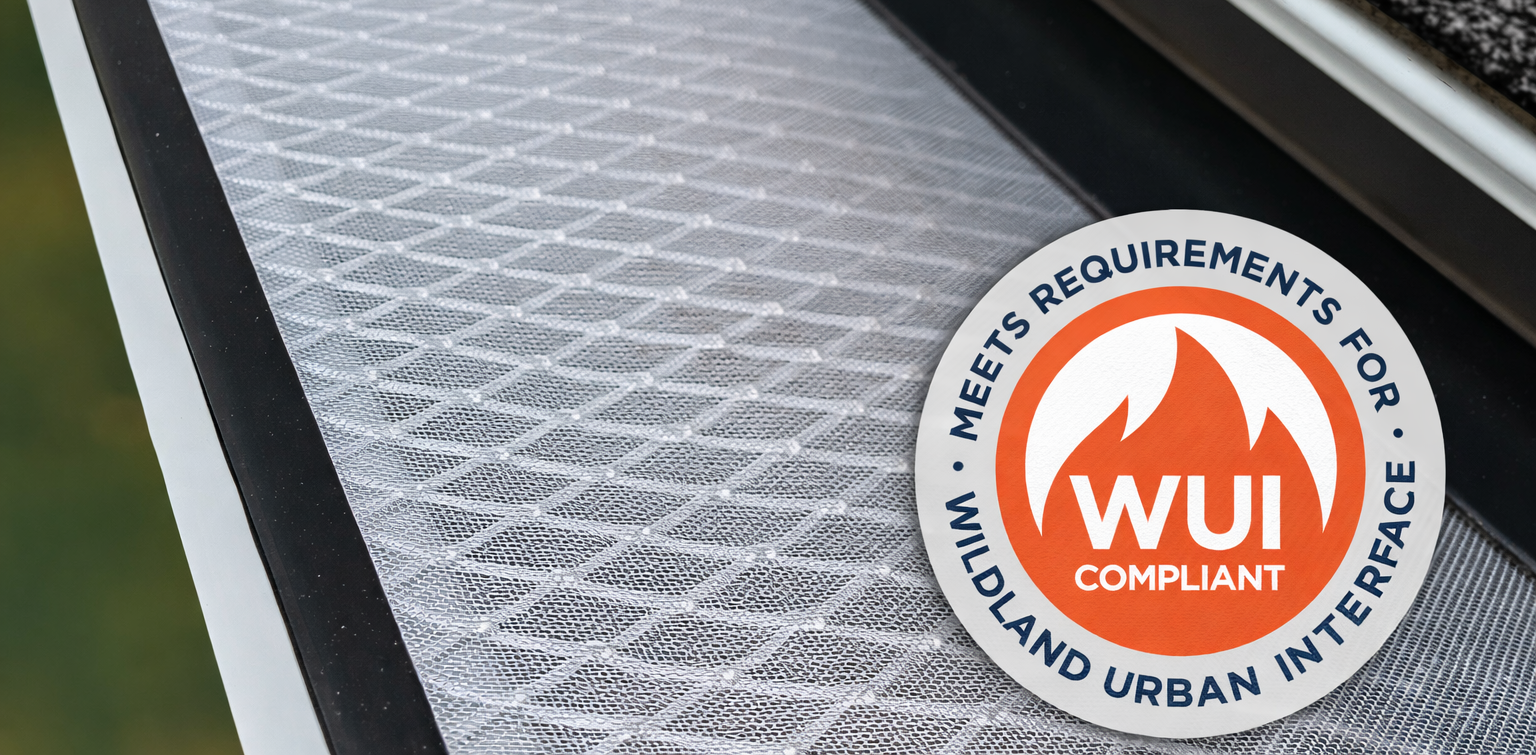
Are Leaf Solution Gutter Guards Fire Resistant and WUI Compliant?

